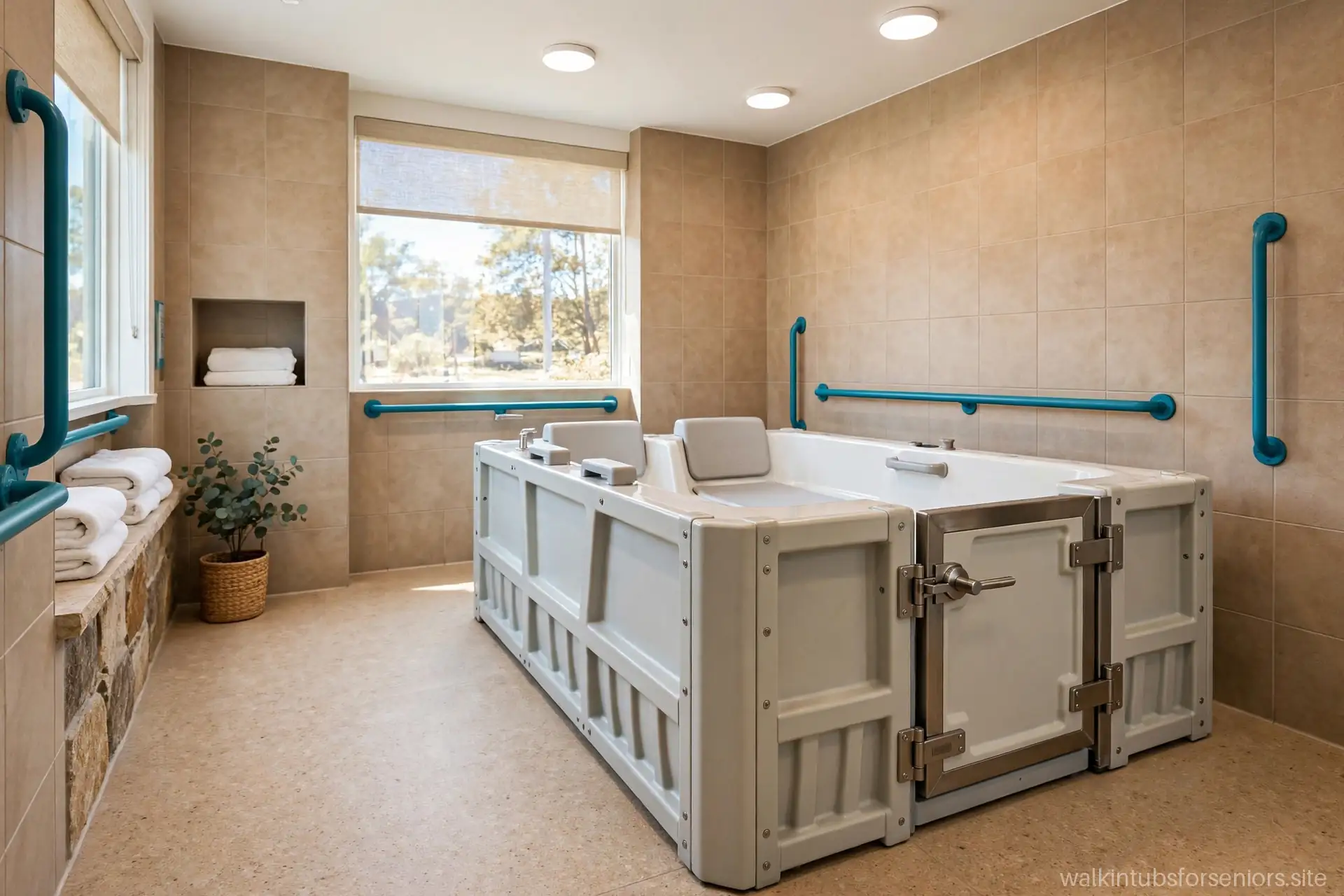
Standard walk-in tubs are built around average body sizes, and for larger bathers that can mean a door that feels narrow, a seat that feels cramped, and a weight rating uncomfortably close to the limit. Bariatric walk-in tubs address all three: wider door openings, roomier seating, reinforced shells, and higher weight capacities — while keeping the low threshold and safety features that make walk-in tubs appealing in the first place.
This guide explains how bariatric models differ from standard ones, what specifications actually matter, and how to make sure the tub fits both your body and your bathroom.
What “bariatric” means for a bathtub
In bathing products, bariatric generally signals three upgrades over standard models: a wider door opening (often several inches wider than standard), a larger interior with a wider seat, and a higher rated weight capacity with a reinforced shell and frame. There is no single industry standard for the term, so treat it as a starting point and verify the actual dimensions and ratings of any model you consider.
Weight capacities on bariatric models are typically rated well above standard tubs. The rating covers the bather plus the water weight, and reputable manufacturers test to a safety margin beyond the stated number. Still, the rating is a limit, not a suggestion — choose a tub rated comfortably above the heaviest expected user.
Doors and entry: the critical difference
The door is where bariatric design matters most. A wider door opening makes entry and exit dramatically easier and reduces the risk of scraping hips or shoulders on the frame. Pay attention to two numbers: the door opening width (the actual clear space you step through) and the threshold height (how high you lift your feet). A bariatric tub should improve both, not just one.
Outward-swinging doors deserve special consideration in bariatric models. Because an outward-swinging door does not require pushing against water pressure, some larger bathers find them easier to operate — but they need clear floor space in front of the tub equal to the door’s swing. Measure that space honestly; a door that cannot fully open is worse than a narrower inward-swinging one.
Seat, interior space, and comfort
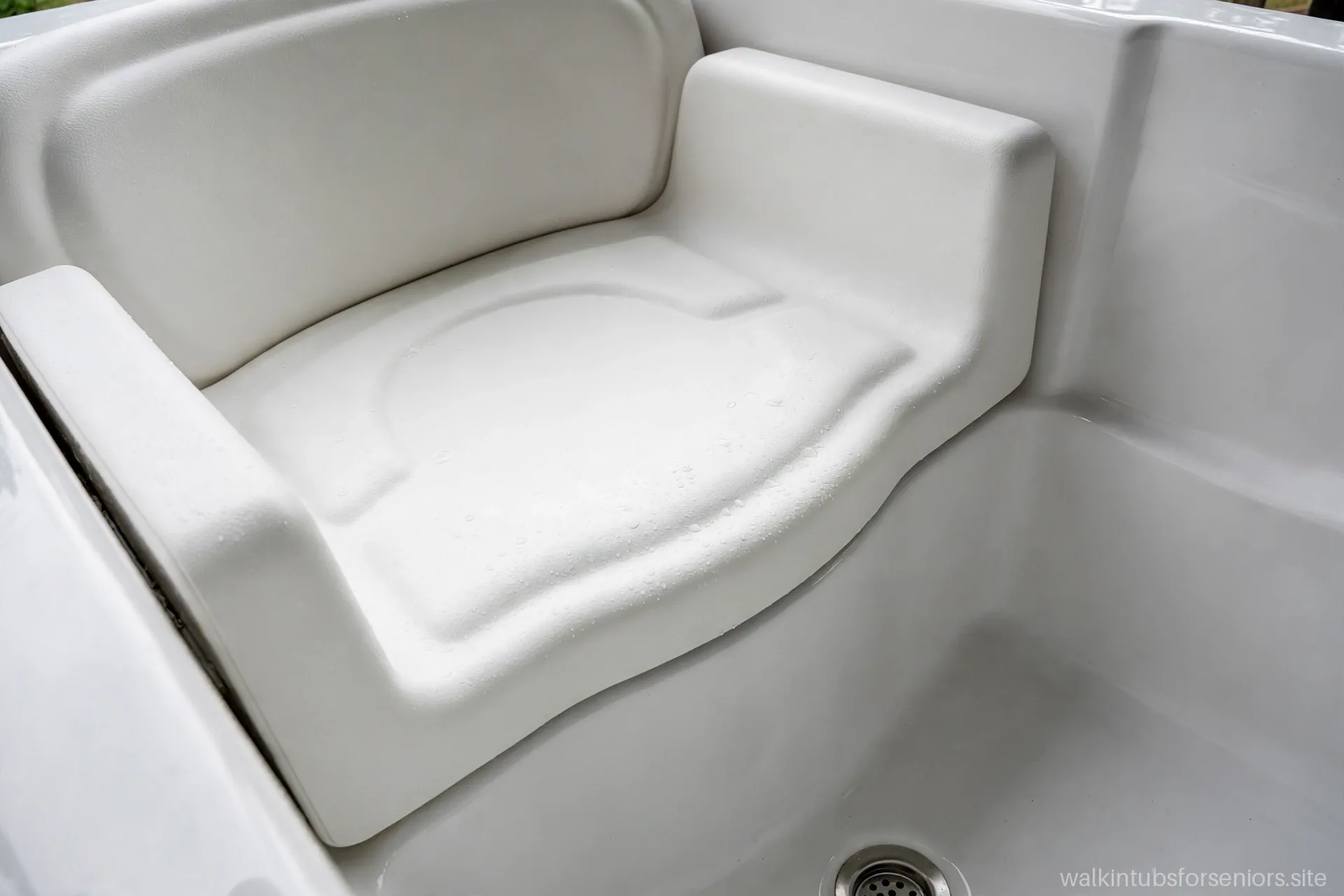
Bariatric seats are wider and often deeper, with reinforced supports underneath. Some models offer a full-width bench rather than a contoured single seat. Sit in the actual model if you can: showroom sitting reveals more about comfort than any dimension chart. Check that your feet reach the tub floor comfortably and that the grab bars fall within easy reach from the seated position — reach distances change with body size, and a bar placed for an average body may be awkwardly far for a larger one.
Interior width matters as much as seat width. A tub that is only marginally wider than standard may still feel confining at the shoulders and hips. Look for models that widen the whole shell, not just the door.
Structure, floors, and installation
A filled bariatric tub is heavy — the bather, plus a larger-than-average volume of water, plus the tub itself. Most installations are fine on standard residential floors, but the subfloor should be sound, level, and free of rot. This is one more reason professional installation matters: a good installer checks the floor structure before setting the tub, and addresses any weakness while the old fixture is out.
Bariatric tubs may also need a larger footprint than the standard 60-by-30-inch alcove, so verify the tub’s outer dimensions against your bathroom early in the process. If the tub will not fit the existing alcove, the project can grow to include wall or layout changes — worth knowing before you fall in love with a model.
Features worth prioritizing
Certain features pay off more in bariatric models than in standard ones. A fast drain is valuable because larger tubs hold more water and take longer to empty — and you are seated inside while you wait. Multiple well-placed grab bars matter more when more body weight is involved in standing up. A hand-held shower on a long hose makes rinsing easier in a roomier tub. And an anti-scald valve is non-negotiable in any tub, bariatric or not.
Hydrotherapy is a personal choice here as elsewhere, but note that larger water volumes take longer to heat and longer to drain — factors that slightly increase the running cost and the wait time of jetted bariatric models.
Cost and coverage realities
Bariatric models cost more than standard walk-in tubs — the larger shell, reinforced structure, and wider door all add manufacturing cost. Treat any price you see as illustrative until you have a written quote, because bariatric pricing varies even more than standard pricing by brand and region.
On coverage: in general, Original Medicare does not pay for walk-in tubs — bariatric or otherwise — because they are not classified as durable medical equipment in most cases. Some Medicare Advantage plans offer limited supplemental benefits that might apply; check your specific plan documents. Our full explainer on whether Medicare covers walk-in tubs walks through the details without the sales pitch. If cost is a barrier, investigate assistance programs for home modifications in your area — and meanwhile, our guide to bathroom fall prevention for seniors covers the lower-cost safety upgrades that complement any tub choice.
Caregiver considerations for larger bathers
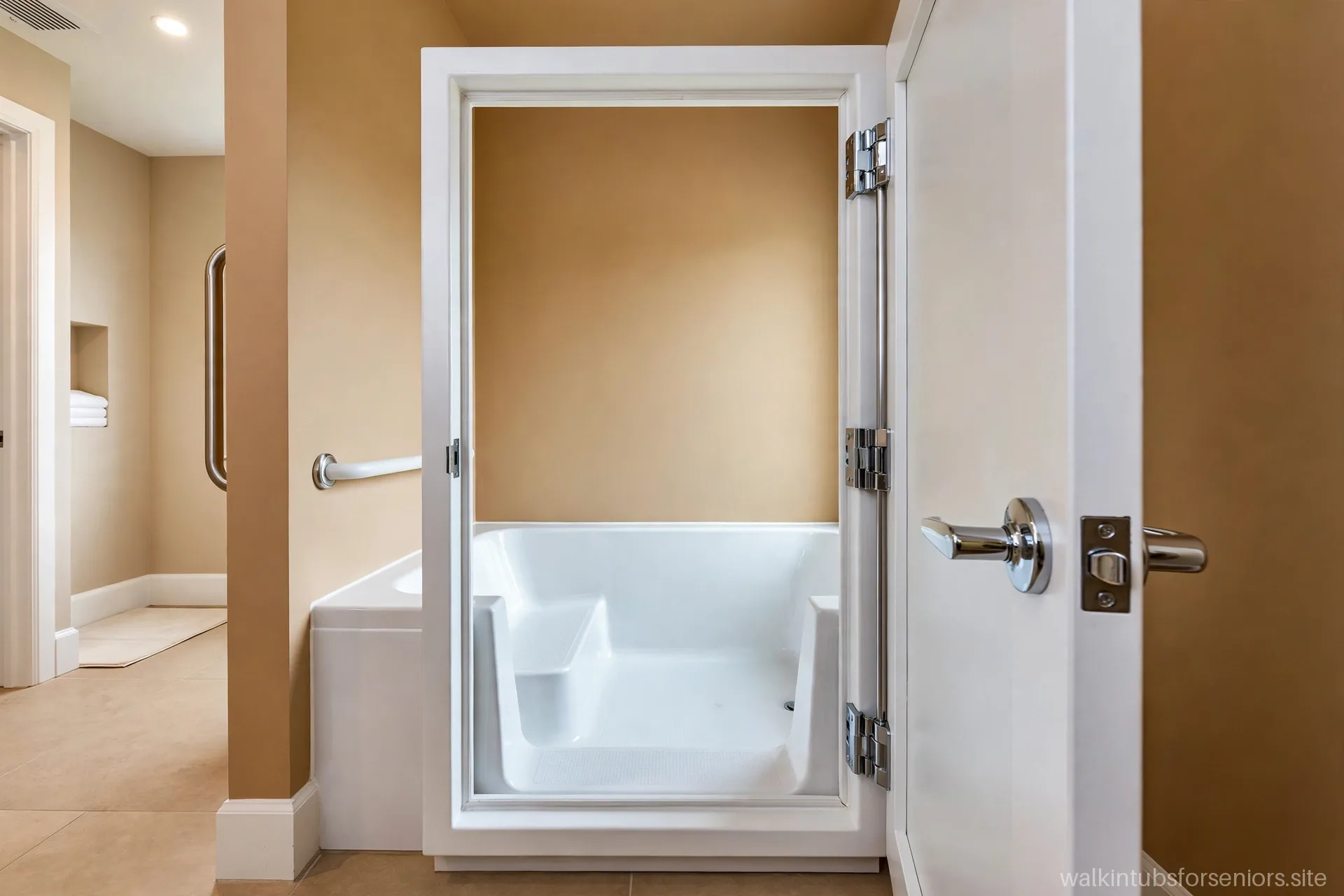
When a caregiver assists with bathing, the tub’s design affects two people’s safety, not one. A wider door opening helps the caregiver reach in to assist without awkward leaning, and a roomier interior gives the bather space to shift while the caregiver steadies from the side. Discuss the actual assistance routine — who stands where, what gets lifted or steadied — before choosing a model, because the answers change which features matter. A hand-held shower on a long hose, for instance, becomes essential rather than nice-to-have when someone else is doing the rinsing.
Caregiver body mechanics matter too. Assisting a larger bather from beside a tub is physically demanding, and back injuries among family caregivers are common. A tub with a lower outer wall height on the caregiver’s side, sturdy grab bars the caregiver can also use for leverage, and enough bathroom floor space to stand in a stable stance all reduce strain. For complex situations — significant weight, limited mobility, or a frail caregiver — an occupational therapist can assess the specific routine and recommend equipment or techniques. The tub is part of a caregiving system, and the system should be designed, not improvised.
Delivery and access for oversized tubs
Bariatric tubs are bigger in every dimension, and that size complicates the journey from the truck to the bathroom. Measure the delivery path with the oversized shell in mind: doorways, hallway turns, and stairwells that would pass a standard tub may not pass a 36-inch-wide model. Rigid acrylic does not bend around corners, and a delivery crew discovering this on arrival day creates expensive improvisation.
Options when the path is tight include removing interior doors from hinges (gains an inch or two), temporarily removing a ground-floor window for direct entry (real, but adds cost), or in difficult cases, a crane delivery through an upper window (rare for tubs, but done). Each option should be priced and planned before ordering, not negotiated with a truck idling outside. Ask the dealer explicitly about delivery logistics for the oversized model — standard delivery assumptions often do not apply, and the surcharge for difficult access is a legitimate line item to get in writing.
The used and refurbished market: bargains with big caveats
Bariatric walk-in tubs are expensive new, so the used market — salvage from remodels, display models, refurbished units — tempts budget-conscious buyers. It can work, but the caveats are larger than with standard tubs because the engineering margins matter more at higher capacities. A display model from a reputable dealer’s showroom floor is the safest used buy: it has never been plumbed, its seals are fresh, and the dealer often includes a limited warranty and professional installation. Expect savings of twenty to forty percent off list, and verify the exact model’s weight rating and dimensions before committing — showroom models are sometimes older generations with different specs than current brochures.
Private-party used tubs — someone’s remodel leftover sold online — are where caution multiplies. You cannot verify how the tub was uninstalled (door seals and gaskets are easily damaged in removal), whether the shell has stress cracks invisible to a casual look, or whether all the proprietary parts — door hardware, control panels, pump assemblies — are present and functional. Replacement parts for discontinued models can be unobtainable, turning a bargain into a very heavy paperweight. If you go this route, budget for a plumber to inspect it before money changes hands, confirm the manufacturer still supports the model with parts, and assume the warranty is void — factor that lost protection into the price.
One more consideration specific to bariatric models: weight ratings and structural reinforcements are engineered as a system. A used tub missing its original installation manual may lack the specified floor reinforcement details, and improvising support for a 600-plus-pound rated unit is not the place to guess. Whatever you save on the tub, do not economize on the installation engineering — a structural assessment by someone who understands point loads is money well spent. The used market rewards patient, meticulous buyers and punishes hasty ones; know which you are before you start shopping.
Frequently asked questions
How wide should the door be?
There is no universal rule, but the clear opening should comfortably exceed your hip width with room to spare — you should be able to step through without turning sideways or squeezing. When comparing models, use the manufacturer’s stated clear-opening width, not the door panel size.
Can a caregiver assist inside a bariatric tub?
The roomier interior helps, but walk-in tubs are still fundamentally single-bather fixtures. A caregiver can assist from beside the tub far more easily than from inside it. Discuss assisted-bathing needs with the installer and, ideally, an occupational therapist before you buy.
What happens if the weight limit is exceeded?
Exceeding the rated capacity risks cracking the shell, damaging the door seal, or collapsing the seat — any of which can cause flooding or injury. Always choose a tub rated comfortably above the heaviest user, and never treat the rating as flexible.
This guide is general information only — not medical advice and not contractor advice. For sizing and safety questions specific to your body and your bathroom, consult your doctor and a licensed installer.