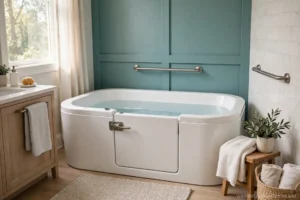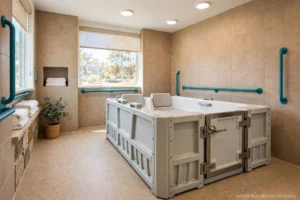
Stepping over the high side of a standard bathtub gets harder with age, arthritis, or balance problems — and the bathroom is one of the most common places for a fall at home. A walk-in tub is designed around that exact problem: instead of climbing over a wall that can be 14 to 18 inches high, you open a watertight door, step over a low threshold of just a few inches, and sit down on a built-in seat.
In this guide, you will learn exactly what a walk-in tub is, how its parts work together, the main styles available, who these tubs are designed for, and what installation usually involves. Everything here is general information to help you research with confidence — not medical advice and not a recommendation to buy any particular product.
How a walk-in tub differs from a standard bathtub
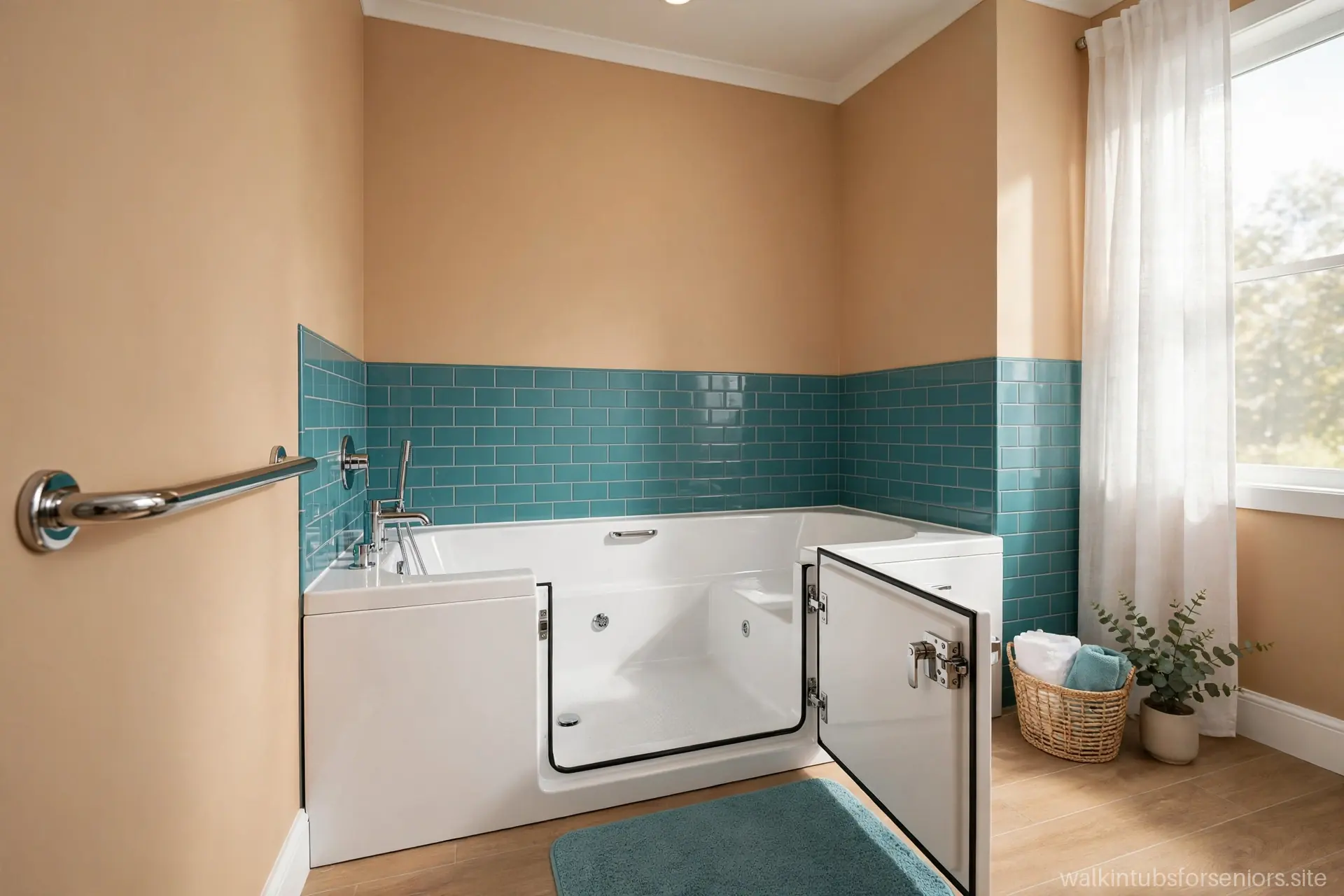
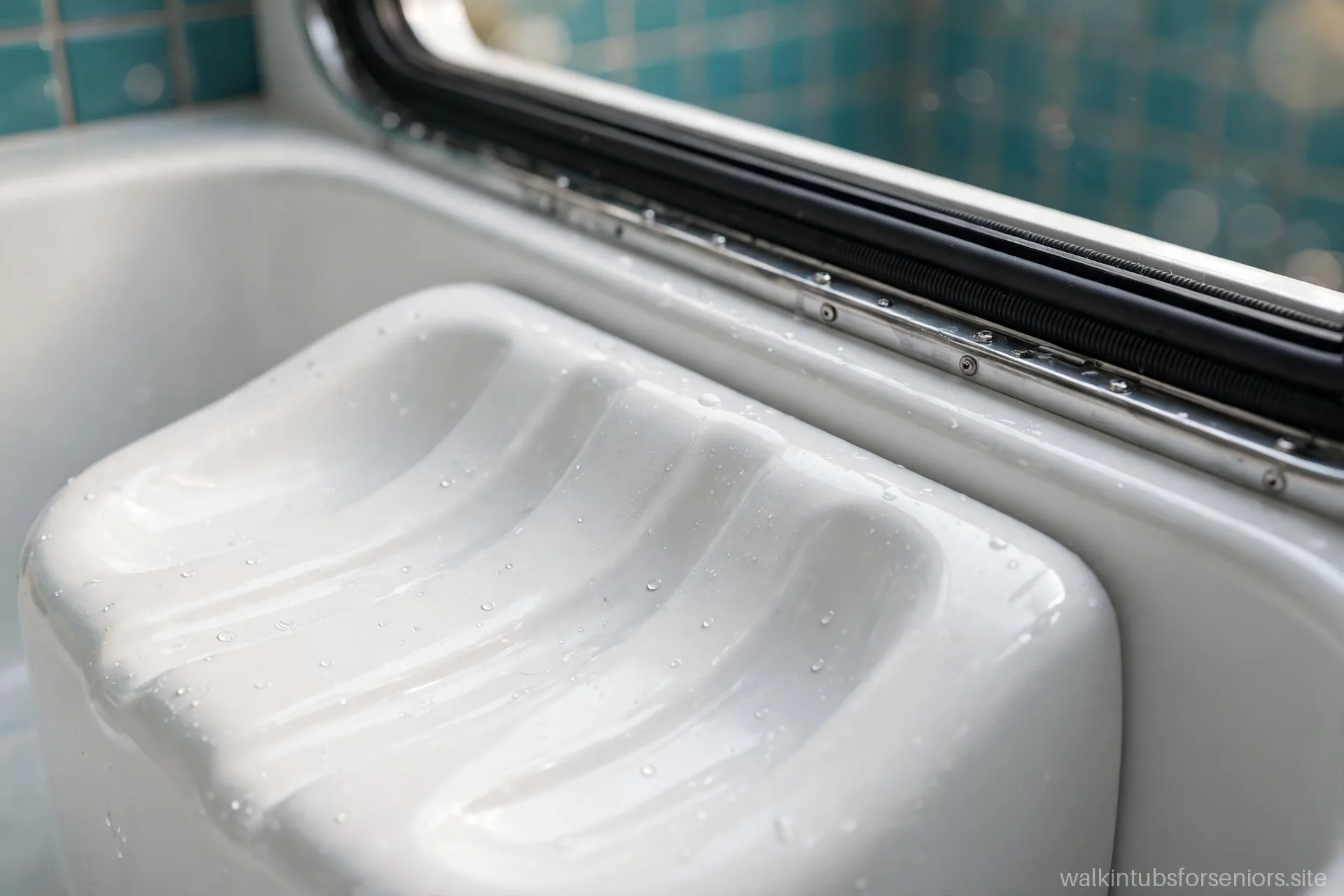
The defining feature is the door. A walk-in tub has a hinged, watertight door built into the side of the tub shell. You open the door, step in through an opening that is typically only 3 to 7 inches above the bathroom floor, close the door, and then fill the tub while you are seated. When you are done, you drain the tub, wait for the water level to drop below the door, and step out.
That last detail matters: because the door must stay sealed while the tub is full, you enter before the water starts and you wait for the tub to drain before you leave. Most models include a fast-drain system to shorten that wait, and some add heated seats or backrests so you stay comfortable while the tub empties. Many buyers say the wait is the biggest lifestyle adjustment compared with a regular tub.
Almost every walk-in tub also includes a built-in contoured seat. You bathe seated rather than reclining or standing, which reduces the effort of getting up from a low position — one of the hardest movements for people with knee or hip problems. The seat height is usually close to chair height, so standing up from it feels familiar.
The key parts of a walk-in tub
Walk-in tubs from different makers share the same basic anatomy. Understanding the parts helps you compare models on features rather than marketing language.
The door
The door is the heart of the design. It swings inward on most models — the water pressure inside the tub actually helps press an inward-swinging door tighter against its seal. Some models use outward-swinging doors, which can be easier to open in an emergency because you are not pushing against water pressure, but they need clear floor space in front of the tub. Door seals are typically silicone gaskets rated for many years of use, and most manufacturers cover them under warranty.
The seat
The built-in seat is molded into the tub shell at roughly chair height. Some seats are heated, some are removable for cleaning underneath, and wider models offer bariatric seating. A good seat supports your back and lets your feet rest flat on the tub floor.
Grab bars and controls
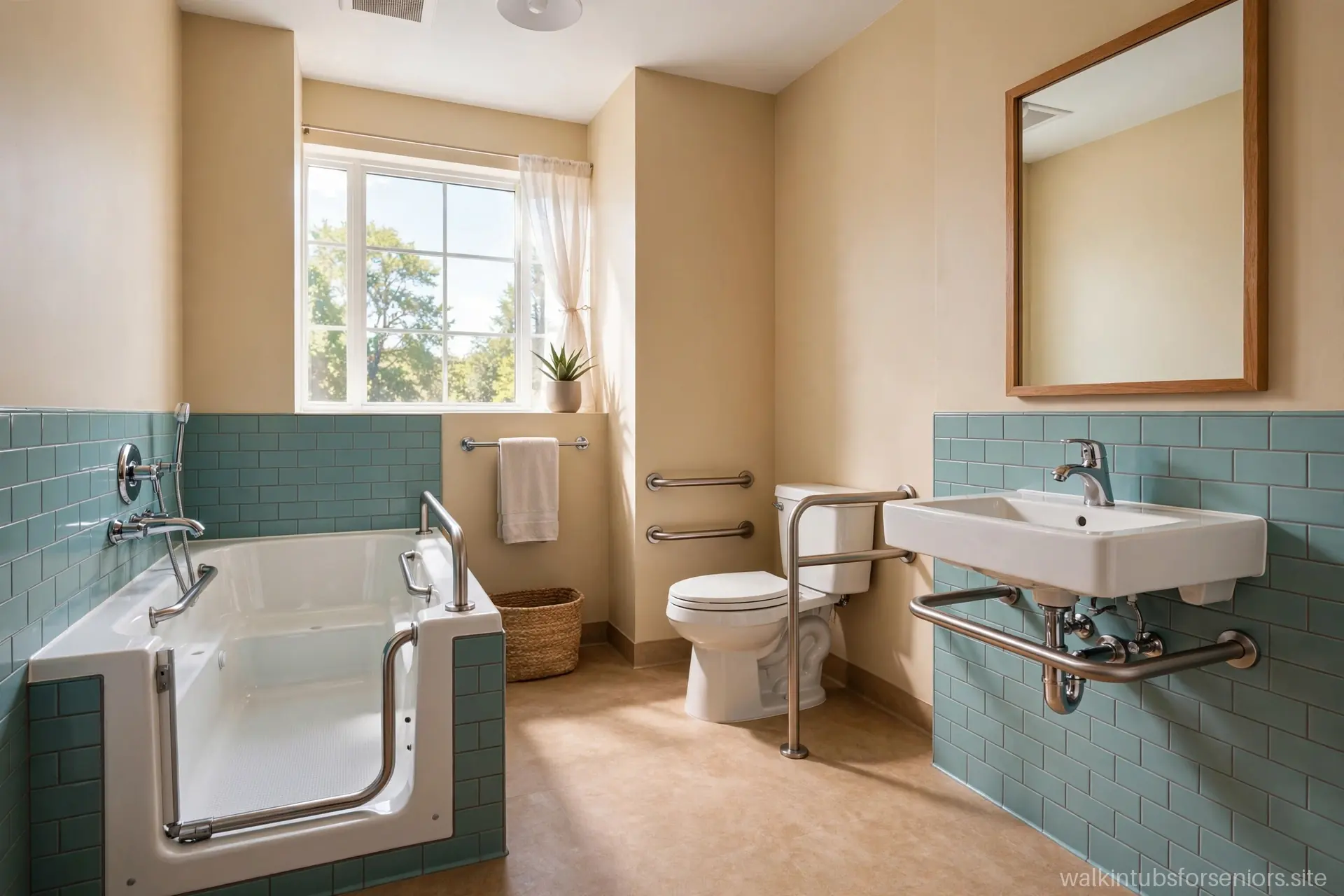
Most walk-in tubs come with at least one grab bar, and many have two or three positioned for entering, sitting, and standing. Faucet and jet controls are usually placed within easy reach of the seated position — an important detail to check if you have limited shoulder mobility or arthritis in your hands.
Faucet, drain, and anti-scald protection
Walk-in tubs use high-flow faucets that fill the tub faster than a standard tub spout, since you are waiting inside while it fills. Anti-scald valves that cap the maximum water temperature are standard on quality models and are worth confirming on any model you consider.
Who walk-in tubs are designed for
Walk-in tubs are designed for adults who want to keep bathing independently but find a standard tub or shower difficult or risky. That commonly includes people with arthritis, joint replacements, Parkinson’s disease, multiple sclerosis, general frailty, or simply a fear of falling in the bathroom. They are also popular with caregivers, because the seated position and low threshold make assisted bathing safer and less physically demanding.
A walk-in tub is not a medical device in the regulatory sense, and buying one does not require a doctor’s prescription. That said, if you have a specific medical condition, it is sensible to talk with your doctor or an occupational therapist about whether a walk-in tub — or a different bathroom modification — best fits your needs. The National Institute on Aging publishes fall-prevention and home-safety guidance that is a useful companion read while you research.
Walk-in tubs are not ideal for everyone. If you cannot sit upright comfortably, if you need a fully reclined soak, or if waiting for the tub to fill and drain sounds frustrating, a barrier-free shower with a bench may suit you better. There is no single right answer — only the right fit for your body, your bathroom, and your daily routine.
Soaker, air, and whirlpool: the three main styles
Walk-in tubs come in three basic bathing styles, and the difference comes down to how the water moves around you.
A soaker is the simplest style: still, deep warm water with no jets. It costs the least, uses the least electricity, and is the easiest to keep clean. Many buyers who simply want a safer way to take a bath choose a soaker and never miss the jets.
An air bath (sometimes called hydrotherapy-air) pushes warmed air through dozens of small ports in the tub shell, creating thousands of gentle bubbles. The sensation is a soft, full-body fizz rather than a targeted massage. Air systems are popular with people who have sensitive skin or who dislike strong water pressure.
A whirlpool (hydrotherapy-water) uses a pump to push water through adjustable jets aimed at the back, legs, and feet. The massage is stronger and more targeted than an air bath. Whirlpool models need a dedicated electrical circuit for the pump and require a cleaning routine to keep the jet lines fresh.
Combination models include both air and water jets. They cost the most and use the most electricity, but they give you both sensations in one tub.
What installation usually involves
Most walk-in tubs are designed to fit in the footprint of a standard bathtub or shower alcove, roughly 60 inches long and 30 to 32 inches wide. Installation typically takes one to three days and involves removing the old tub or shower, checking and adjusting the plumbing, setting the new tub in place, connecting the drain and water lines, and sealing everything against the walls.
Hydrotherapy models need a dedicated GFCI-protected electrical circuit, which may require an electrician to run new wiring. If your bathroom floor or walls need repair once the old fixture comes out, that adds time. For the full picture of pipes, wiring, and permits, see our guide to plumbing and electrical requirements for walk-in tubs.
Safety features to expect
Beyond the low threshold and seat, look for textured non-slip flooring, at least one sturdy grab bar, an anti-scald valve, a hand-held shower wand, and a fast drain. Higher-end models add heated seats and backrests, chromotherapy lighting, and outward-swinging doors. Our walkthrough of fast-drain systems and heated seats explains which comfort features are genuinely useful and which are mostly marketing.
Walk-in tub vs. walk-in shower: how to decide
The walk-in tub’s main rival is not another tub — it is the curbless (barrier-free) shower with a bench. Both eliminate the high step-over; they differ in everything else. Choose the shower if you prefer quick showers to long soaks, if standing stamina is limited but seated showering appeals, if the budget is tighter (a shower conversion often costs less than a tub plus its plumbing), or if multiple household members will use the fixture and most prefer showers. Choose the tub if you love soaking, if warm-water immersion eases your joint stiffness, if you want the option of both bathing and showering in one fixture, or if the seated, enclosed feeling of the tub feels more secure.
Consider the household, not just yourself. A tub-to-shower conversion in the only bathroom removes the soaking option for everyone, including future buyers — in a two-bathroom home, converting one to a walk-in tub and keeping the other conventional preserves everyone’s options. Also weigh the daily routine honestly: the tub’s fill-and-drain wait is real, and people who find waiting irritating often end up preferring the instant-on nature of a shower. There is no universally right answer — only the fixture that matches how you actually bathe, in the home you actually live in, for the years ahead.
Frequently asked questions
Do you have to sit in the tub while it fills?
Yes. The door seals from the inside, so you enter the empty tub, close the door, and fill it while seated. High-flow faucets shorten the wait, and this is the main routine difference versus a standard tub.
Can the door leak?
The door uses a compression gasket that is pressed tighter by water pressure when the door swings inward. Leaks are uncommon with proper installation, and door seals are a standard warranty item. Outward-swinging doors rely on a latch mechanism instead and need their latches checked periodically.
Will a walk-in tub fit where my old tub was?
In most cases, yes. Standard walk-in tubs are built to the same 60-by-30-inch footprint as a typical alcove tub. Measure your space carefully — including the door swing and the hallway route the tub travels during delivery — before you order.
Can you still take a shower in a walk-in tub?
Most models include a hand-held shower wand, and many can be fitted with a shower head on a slide bar plus a curtain or glass enclosure, so the tub doubles as a seated shower.
This guide is general information only — not medical advice and not contractor advice. Talk to your doctor about bathing safety, and get written quotes from licensed local installers before making decisions.