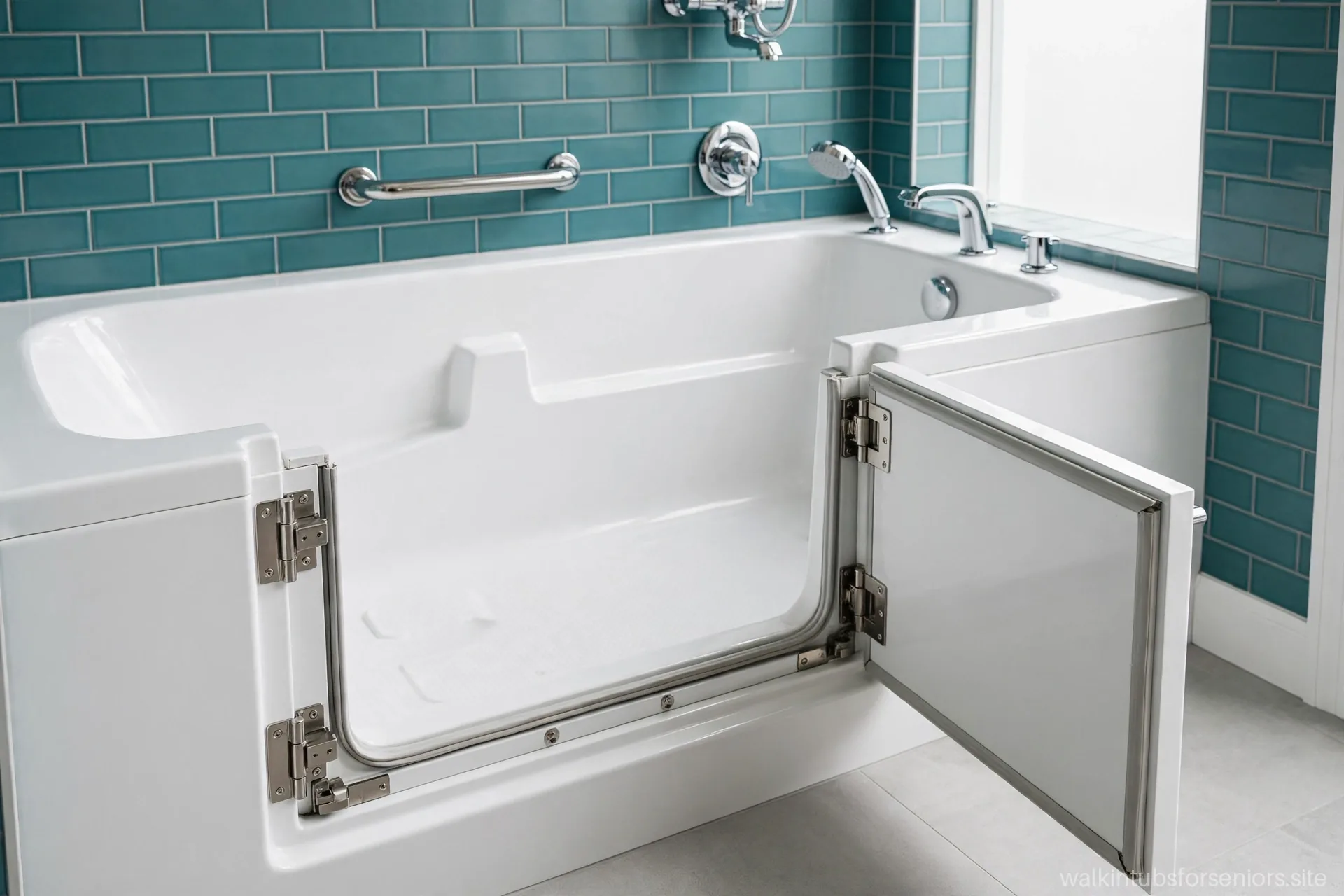
Every walk-in tub has a door, and that door is doing more work than any other part of the tub: it must open easily when dry, seal completely under the pressure of a full tub of water, and keep sealing that way for years. The two designs — inward-swinging and outward-swinging — achieve this in opposite ways, and the choice affects emergency access, bathroom layout, and long-term maintenance.
This guide explains how each door type works, where each shines, and what to check before you commit.
How inward-swinging doors work
An inward-swinging door opens into the tub — you pull it toward you as you step in. When the tub fills, water pressure pushes the door outward against its frame, pressing the silicone gasket tighter into its seat. In other words, the fuller the tub, the tighter the seal. This self-energizing seal is why inward-swinging doors dominate the market: the physics works in your favor.
The tradeoff is emergency access. If a bather becomes incapacitated inside a full inward-swinging tub, a rescuer cannot simply push the door open — the water pressure holds it shut. The tub must be drained first (most have an emergency drain or removable front panel for this). This is a real consideration for people bathing alone with serious medical conditions, and worth discussing with your doctor.
How outward-swinging doors work
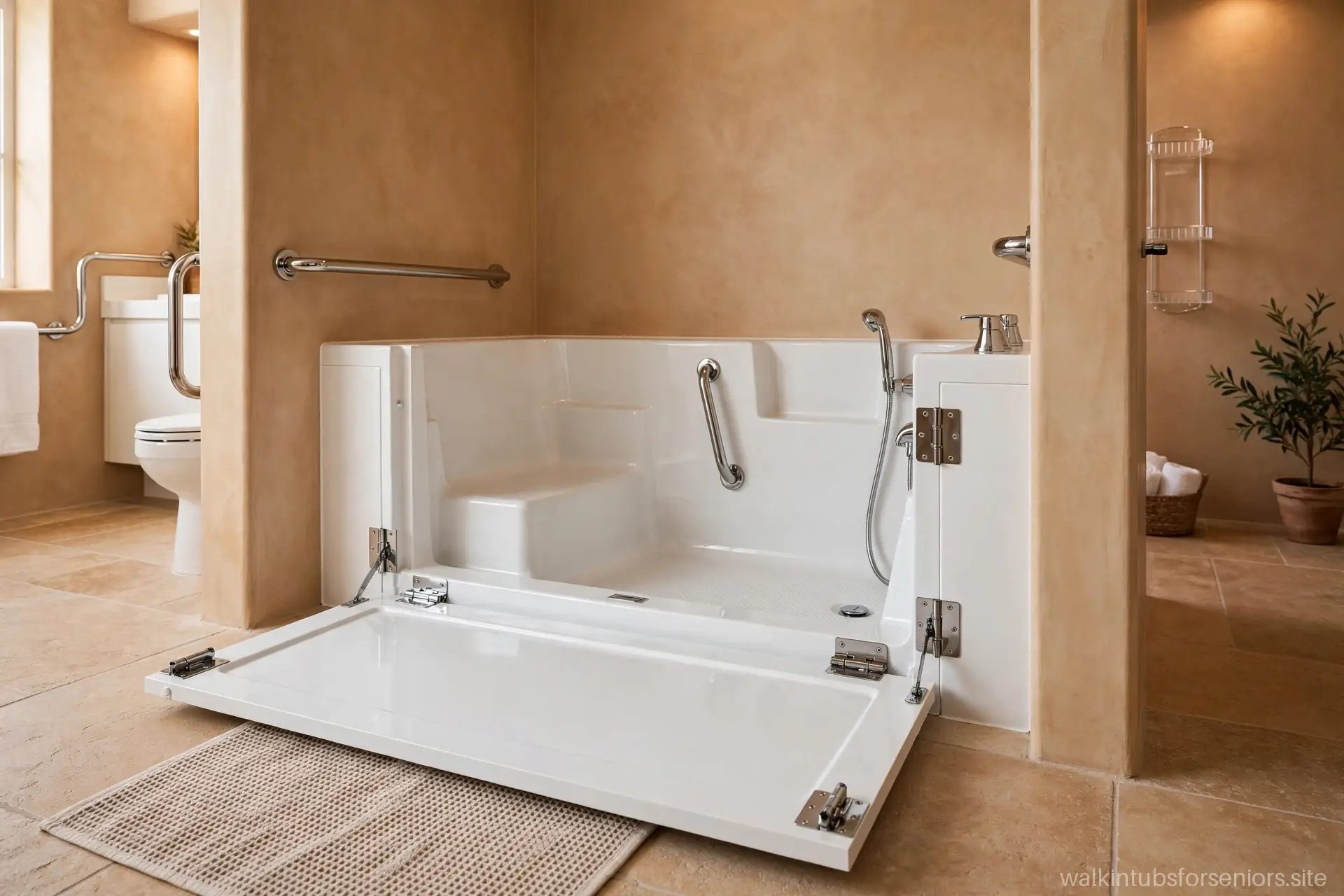
An outward-swinging door opens toward the bathroom — you push it away as you enter. Its seal works in reverse: instead of water pressure helping, the door relies on a robust latch mechanism and compression gasket to hold back the water. Quality outward-swinging doors seal reliably, but the mechanism has more parts and depends on the latch staying properly adjusted.
The advantage is access. In an emergency, a rescuer can open an outward-swinging door even with water in the tub — water will spill out, but access is immediate. For the same reason, some caregivers prefer outward-swinging doors for assisted bathing. The cost is floor space: you need a clear area in front of the tub equal to the door’s swing arc, free of vanities, toilets, and walls.
Side-by-side: which door for which situation
Choose an inward-swinging door when your bathroom is tight on floor space, when the bather is generally independent, and when you want the simplest, most proven sealing design. This is the right default for most buyers.
Choose an outward-swinging door when emergency access is a priority — for example, someone with a seizure disorder, a history of fainting, or advanced frailty who bathes alone — or when a caregiver needs quick access. Just verify the swing clearance with a tape measure, not a guess.
Some manufacturers offer doors that can be configured either way, and a few offer sliding or lift-up designs. Treat unusual mechanisms with healthy skepticism: ask how the seal works, what wears out, and how parts are replaced.
Gasket care: keeping any door watertight
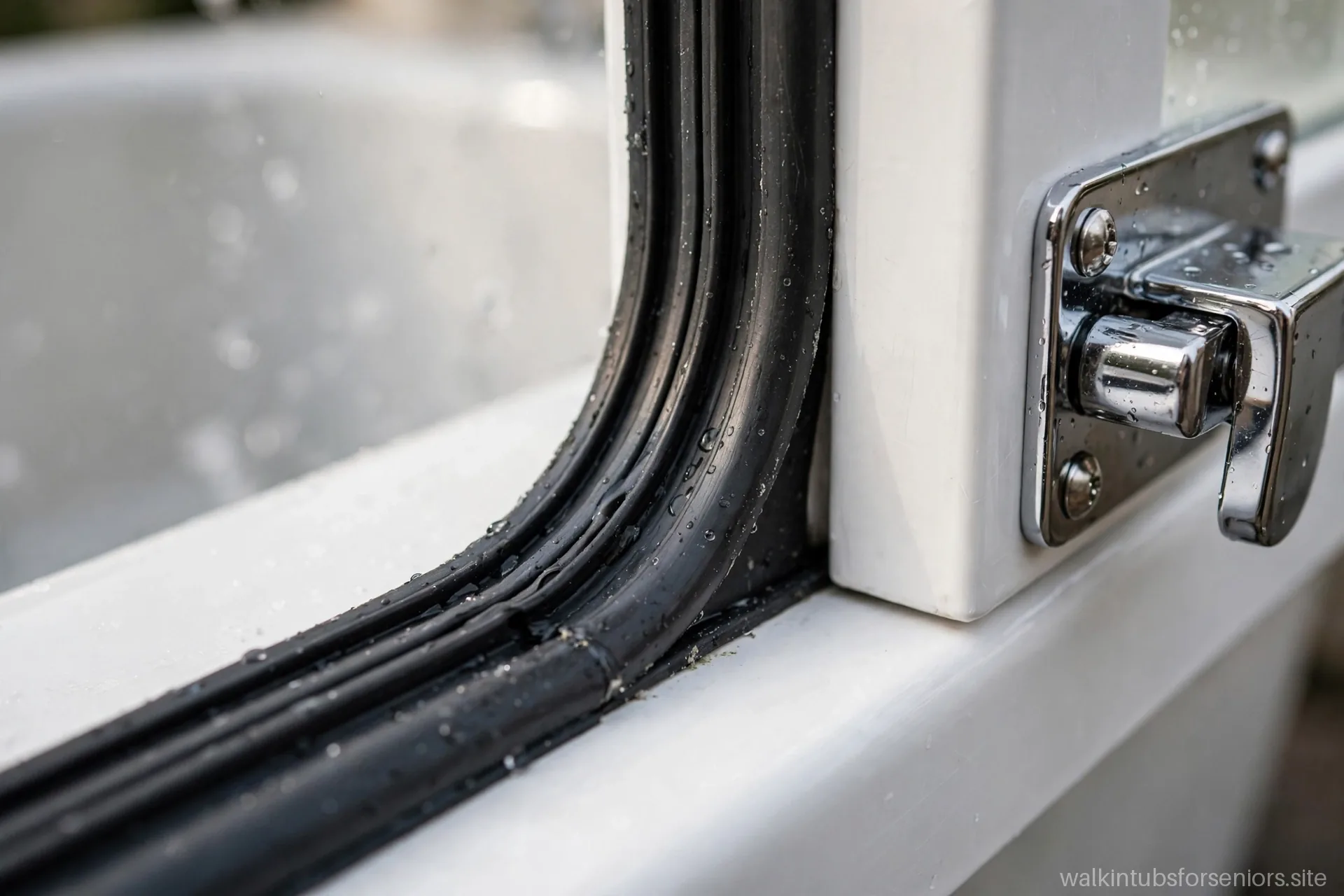
The silicone gasket is a wear item, like a tire. With normal use it lasts many years, but it needs basic care: wipe it down after bathing, keep it free of soap scum and hair, and never use abrasive cleaners or petroleum-based products on it. Inspect it every few months for cracks, flattening, or gaps. Replacement gaskets are inexpensive and usually user-replaceable — another reason to buy from a manufacturer with reachable customer service and available parts.
If you ever notice dampness around the door base, do not ignore it. A failing gasket caught early is a ten-minute fix; a failing gasket ignored for a year can rot a subfloor.
Locks, latches, and handles
Door hardware should be operable with wet, soapy hands and limited grip strength — large lever handles beat small knobs for arthritic hands. The latch should engage with a positive, unmistakable click so you know the door is sealed before you start filling. If a floor model’s handle feels fiddly in the showroom, it will feel worse with wet hands at home.
Check too that the handle position works from a seated position inside the tub and from standing outside it. Some designs optimize for one and neglect the other.
Door choice and bathroom layout
Your bathroom’s layout may decide for you. In a standard 60-inch alcove with a vanity nearby, an outward-swinging door often cannot clear the swing — inward-swing wins by default. In a larger bathroom or a corner installation with open floor in front, you have a genuine choice. Sketch the swing arc on the floor with painter’s tape before you order; it takes five minutes and prevents an expensive mistake.
Layout planning goes beyond the door: delivery path, plumbing access, and where the bather will towel off all matter. If budget is a concern while you plan, our guide to grants and assistance for bathroom safety upgrades covers the kinds of programs that sometimes help with accessibility remodeling — and the honest limits of what they cover.
Safety beyond the door
The door gets the attention, but the rest of the safety package matters equally: textured flooring, grab bars positioned for your reach, an anti-scald valve, and a fast drain so you are not waiting in cooling water. Our roundup of bathroom safety accessories beyond the tub covers the supporting cast — from shower chairs to raised toilet seats — that makes the whole bathroom safer, not just the tub.
Door seals in years 5 to 15: what to expect
A door gasket does not fail suddenly — it ages gradually, and knowing the signs keeps a small maintenance item from becoming a water-damage event. In the early years, the silicone stays supple and the seal is effortless. Around the middle years, you may notice the gasket taking a “set” — flattening slightly where it compresses — which is normal and harmless up to a point. The warning signs that replacement is due: visible cracks or tears, sections that stay compressed instead of springing back, or any dampness on the bathroom floor near the door after a bath.
Replacement is one of the most owner-friendly repairs on a walk-in tub: the old gasket pulls out of its channel, the channel gets cleaned, and the new gasket presses in — typically a 15-minute job with no tools beyond your hands. Buy the replacement from the manufacturer (gaskets are model-specific), keep a spare on hand after year five, and never use petroleum-based products on the seal — they swell and degrade silicone. For outward-swinging doors, add latch adjustment to the periodic checklist: latches can loosen over years of use, and a latch that does not pull the door fully tight compromises the seal long before the gasket itself wears out.
Kids and grandkids: door safety with little visitors
Walk-in tubs and small children mix with one rule above all: never leave a child unattended in or around the tub, door or no door. Beyond that baseline, a few specifics. Teach visiting grandchildren that the tub door is not a toy — repeated slamming and hanging on the open door stress hinges and latches not designed for playground use. Show older children how the latch works so they are not trapped by confusion in an emergency, and make sure they know never to open the door when the tub is full (a lesson best taught with the tub empty).
For households where small children bathe in the walk-in tub regularly, the anti-scald valve earns its keep twice over, and a non-slip mat designed for the tub’s textured floor adds security for little feet. Store the door’s operation as a supervised activity until children are old enough to understand the flooding consequences of an opened full tub — which is older than most parents estimate. The tub is your safety fixture; around children, your supervision is theirs.
Emergency access: what if someone falls against the door?
This is the safety question door brochures never address: if a bather collapses or falls against the door from inside, can a helper get in? With an inward-swinging door, a body slumped against it can block it from opening — the door needs to swing into the tub, and the person is in the way. This is the single most serious drawback of inward-swing doors, and it deserves a frank discussion before you choose. Outward-swinging doors do not have this problem: the door opens away from the occupant, so a helper can always get in.
If you choose inward-swing for its space and seal advantages — and many buyers reasonably do — mitigate the risk deliberately. Keep a phone within reach of the tub so the bather can call for help. Consider a medical alert button mounted at tub height. Make sure someone is home during baths for anyone with fainting risk, seizure history, or advanced frailty — this is non-negotiable, not optional. And brief every helper in the household on the procedure: if the door is blocked, the access panel and the ability to drain the tub from outside (know where your drain controls are) become the emergency plan.
Ask the dealer directly: does this model have any emergency release or removable door feature? A few designs include quick-release hinges or lift-off doors specifically for this scenario — a genuine safety differentiator worth paying for if it is available on your shortlisted models. And whatever door you choose, rehearse the emergency plan once, the way you would a fire drill. The time to discover that nobody knows how the door comes off is not during the emergency. Five minutes of rehearsal buys the confidence that the beautiful, safe tub is safe in the scenario that matters most.
Frequently asked questions
How long does a door seal last?
With basic care, many years — manufacturers commonly warrant seals for several years, and replacements are inexpensive. Neglect, harsh chemicals, and petroleum products shorten seal life dramatically.
Can I start filling before I close the door?
No. The tub must be sealed before water enters — filling with the door open floods the bathroom. Make closing and latching the door the first, deliberate step of every bath.
What if the power goes out while I’m in a jetted tub?
The door seal is mechanical, not electric, so it keeps working. The jets and blower simply stop. Drain normally (drains are gravity-operated) and exit once the water is below the door line.
This guide is general information only — not medical advice and not contractor advice. If emergency access during bathing is a medical concern for you, discuss door choice with your doctor before buying.