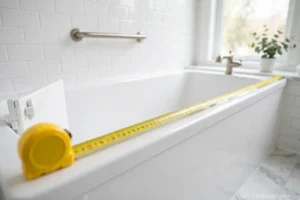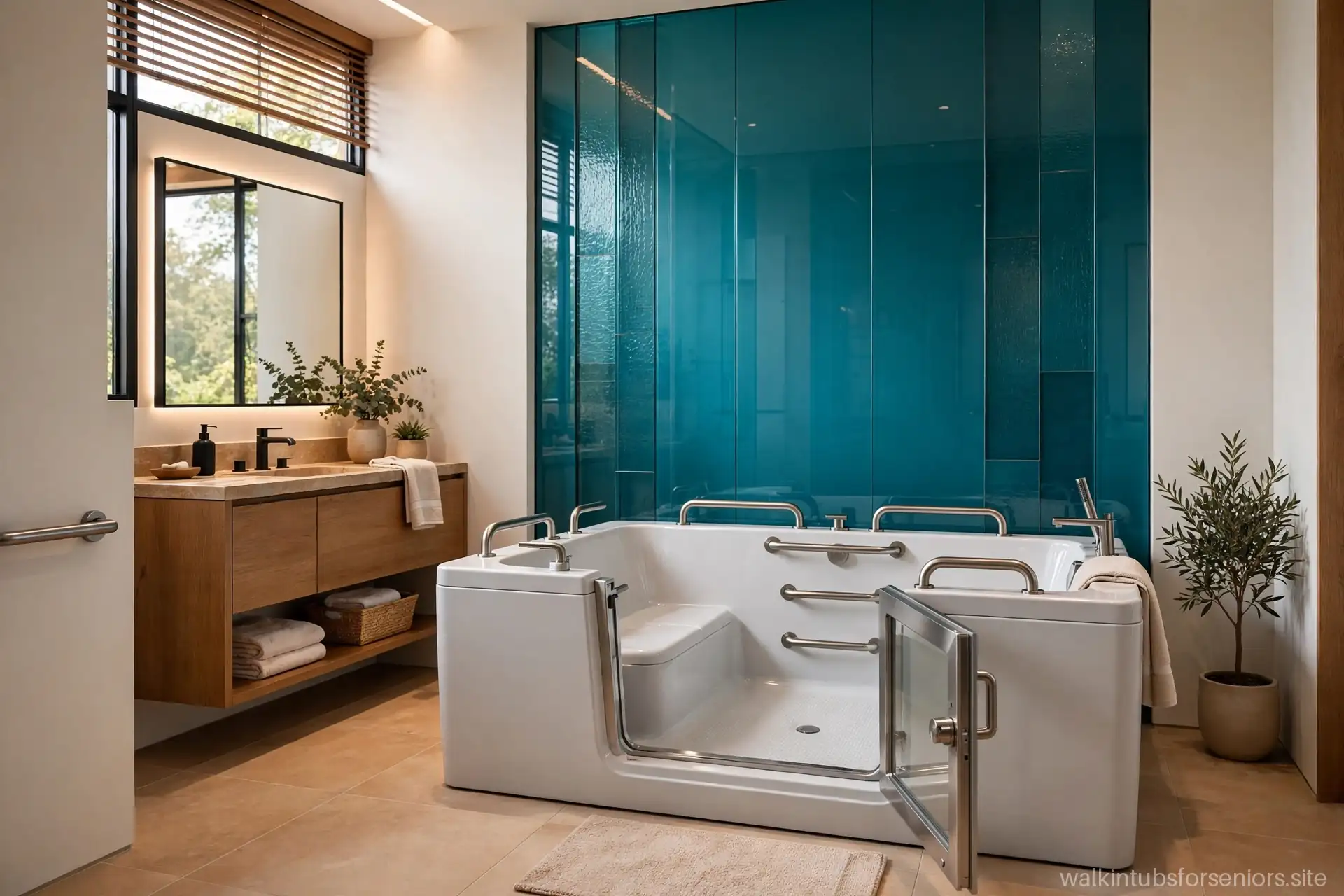
Every year brings small shifts to the walk-in tub market — which features are standard, how buying works, what installers are seeing in the field. This guide is a qualitative snapshot for 2026 buyers: what feels different this year, what has stayed the same, and how to shop wisely right now. It contains no invented statistics, no fake trend data, and no predictions dressed as facts — just grounded observations about the current buying landscape.
What has stayed the same
The fundamentals do not change year to year. The core buying decision is still tub style (soaker, air, whirlpool, combo), door type (inward vs. outward swing), and fit (your body, your alcove, your delivery path). Installation is still a 1–3 day professional project with plumbing and usually electrical work. Original Medicare still generally does not cover walk-in tubs. The features that mattered five years ago — low threshold, textured surfaces, well-placed grab bars, fast drain, anti-scald valve — matter exactly as much today. If you are new to the topic, start with the foundations — how the door, seat, and safety features work — before tracking trends.
Feature trends buyers are seeing
Qualitatively, a few directions are visible in current model lineups. Bundling has increased: features that were once premium add-ons — fast drains, heated seats, chromotherapy lighting — increasingly appear in mid-range packages rather than only at the top tier. That is good for buyers, but compare carefully: a “premium package” label means little until you list what is actually in it.
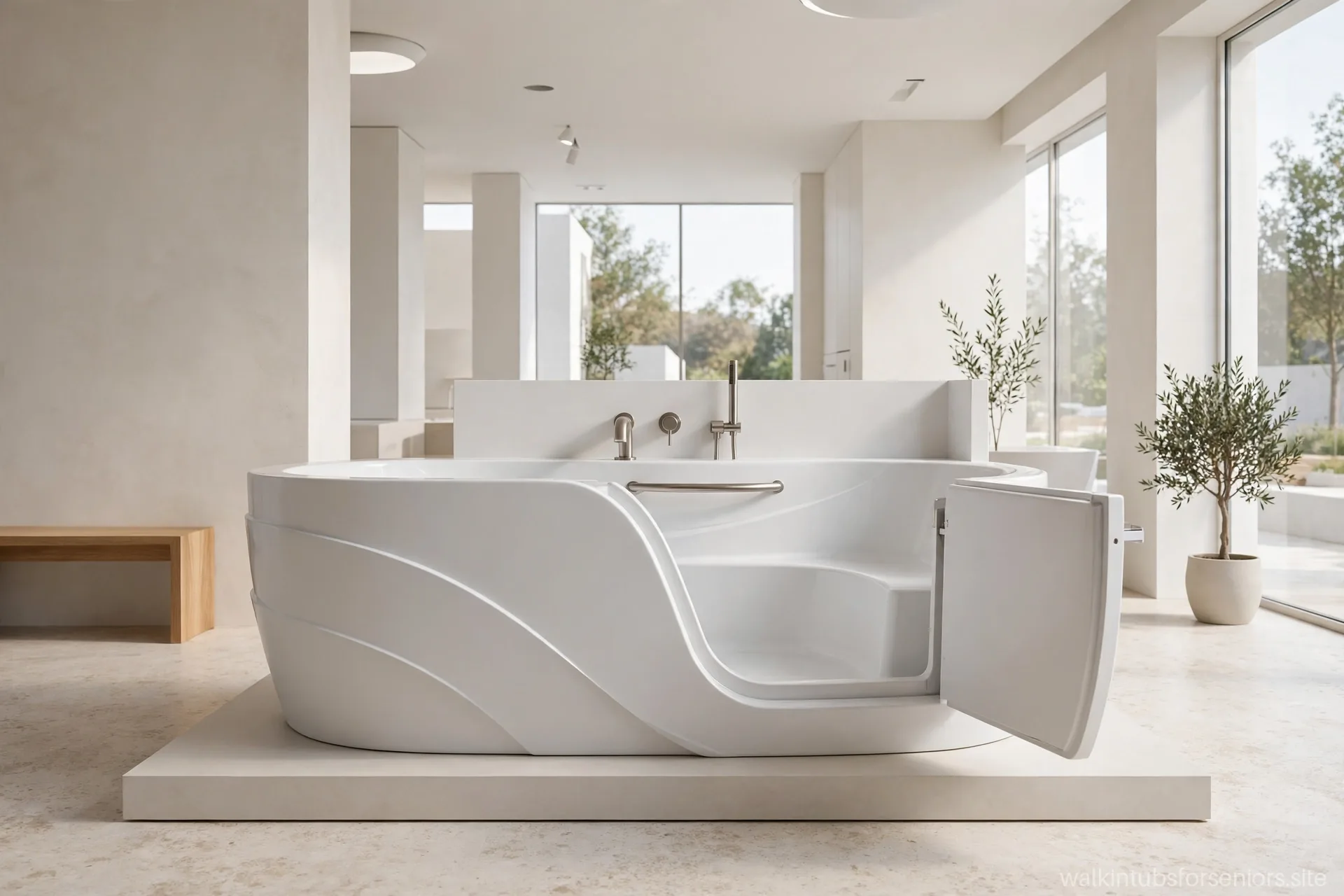
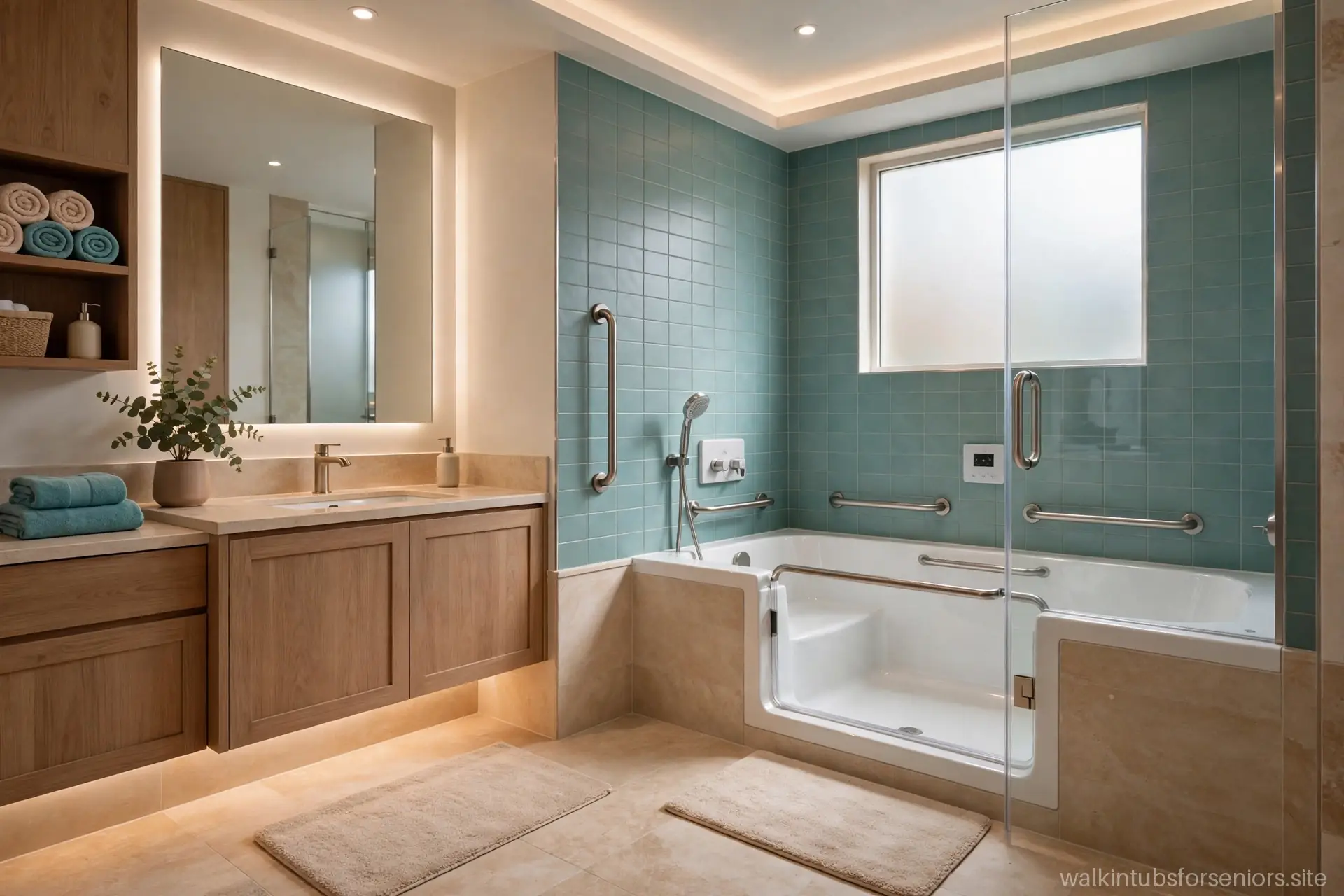
Outward-swinging doors are more widely available than they were a few years ago, giving buyers with emergency-access concerns more choices beyond the traditional inward-swing default. Finish and design options have broadened — more colors, more faucet styles, cleaner modern lines — reflecting that buyers increasingly treat the tub as a design choice, not just a medical-adjacent fixture.
Online research keeps getting easier and showroom visits rarer, which cuts both ways: more information, less hands-on testing. If you buy primarily online, be extra disciplined about verifying dimensions, warranty service terms for your area, and who performs installation.
The buying process in 2026
The typical path remains: research online, visit a showroom if possible, get multiple written quotes from licensed installers or dealer-installers, verify financing or coverage, and schedule installation. What has gradually improved is quote transparency — competitive pressure has pushed more dealers toward itemized quotes, which makes comparison shopping more productive than it used to be. Take advantage: demand line-item quotes from everyone, and treat any reluctance as information.
Lead times from order to installation remain measured in weeks rather than days for most manufacturers — plan accordingly, especially if the project is tied to a surgery recovery date or a move. Ask for a realistic delivery window in writing before you commit to dates.
What installers are seeing
Talk to installers and a consistent theme emerges: the jobs that go smoothly are the ones where the buyer did the homework — verified measurements, understood the electrical scope, chose the tub style deliberately. The jobs that go badly usually trace to rushed decisions: a tub ordered from dimensions guessed from memory, electrical needs discovered mid-project, or a bargain installer whose quote omitted half the scope. The market has not changed this dynamic; if anything, busier installer schedules make preparation more valuable, since rescheduling a delayed project costs everyone time.
Advice for buying this year
Five practical recommendations. First, nail the fundamentals — textured non-slip surfaces, well-placed grab bars, and a fast drain matter more than any trend. Second, get everything in writing: quotes, timelines, warranty terms, financing terms. Third, verify independently any claim about Medicare, grants, or tax deductions — an honest Medicare coverage baseline gives you the facts before a salesperson’s version does. Fourth, prioritize installation quality over feature quantity — a well-installed mid-range tub outperforms a poorly installed luxury model for its entire life. Our installation overview shows what good work looks like.
Fifth, think in decades. A walk-in tub is a 15-to-20-year fixture. Buy for the body you will have in ten years, not just the body you have today — a little extra room, a few more grab bars, and a reputable company with parts availability are the choices future-you will thank you for.
A note on hype
You will encounter “revolutionary” new features and “limited-time” offers every year, 2026 included. Most “revolutions” are refinements: a slightly better seal design, a quieter blower, a nicer finish. Evaluate every claimed innovation against the fundamentals — does it make entry safer, bathing more comfortable, or maintenance easier? If not, it is marketing. And “limited-time” pricing from a company that will happily sell you the same tub next month is theater, not urgency. The right time to buy is when your research is done, not when a countdown timer says so.
What to ignore this year
Some of what you will encounter in 2026 deserves deliberate ignoring. Countdown timers and “expiring” deals on dealer websites — the price will be there next week; urgency is manufactured. Revolutionary feature claims for refinements — a slightly redesigned latch is not a revolution, whatever the banner says. AI-designed, nano-coated, quantum-sealed marketing language — if the brochure needs science fiction to describe a bathtub, the bathtub is ordinary. Social-media testimonials presented as reviews — compensated endorsements are advertising, and the disclosure is often buried.
One-size-fits-all rankings of “best walk-in tubs 2026” — the best tub depends on your body, bathroom, and budget, and most rankings are pay-to-play affiliate content (this site runs no affiliate links and takes no placement fees, which is why you will not find a ranked list here). What to pay attention to instead: specification sheets, warranty documents, itemized quotes, installer references, and your own body in a showroom model. The signal is in the paperwork; the noise is everywhere else.
The timeless checklist
Strip away the year, the trends, and the marketing, and the walk-in tub decision reduces to a checklist that has been correct for a decade and will be correct for the next one. Low threshold you can step over comfortably. Door that seals confidently and suits your emergency-access needs. Textured floor and seat with real grip. Grab bars of real metal, placed for your reach, anchored to structure. Anti-scald valve, verified. Fast drain. Hand-held shower. Tub style matched to your maintenance tolerance. Size matched to your body and your alcove. Electrical scope understood and quoted. Three itemized quotes from licensed installers. Warranty read in full, labor terms noted. Company established enough to honor it.
Run that checklist against any tub, in any year, and you will buy well. The market will keep producing new features, new finishes, and new urgency — none of which changes what makes a walk-in tub safe, comfortable, and durable. Buy the fundamentals, installed by professionals, from a company that will answer the phone in five years. Everything else is commentary.
The refurbished and floor-model market in 2026
With new tub prices where they are, the secondary market deserves a serious look in 2026 — and it has matured into something more structured than the old classifieds gamble. Several larger dealers now run formal floor-model and refurbished programs: showroom tubs rotated out for new displays, customer returns that were never installed, and units with cosmetic blemishes, all inspected, re-gasketed, and sold with limited warranties. Discounts typically run twenty to forty percent off list, and because these come through dealers, you get professional installation and someone to call if problems arise.
The private-party market — online listings from remodels and estate sales — remains the wild west, with the same caveats it has always had: no warranty, unknown removal history, potential missing parts, and no recourse if the shell has hidden damage. In 2026 the added wrinkle is smarter scams: listings using stock photos, sellers who cannot show the actual unit, prices just low enough to excite but not low enough to alarm. The rules are simple: inspect in person before paying, verify the model number against the manufacturer’s current parts support, and never wire deposits to strangers. A legitimate seller tolerates scrutiny; a scammer rushes you.
One genuinely new development worth noting: a few manufacturers have begun certified pre-owned programs with factory inspection checklists and transferable limited warranties — the closest the industry has come to the used-car model. Availability is limited and concentrated in major metro areas, but if a program exists for your shortlisted brand, it can deliver most of the new-tub assurance at a meaningful discount. Whatever route you take, apply the timeless filters from the rest of this guide — fit, installation quality, warranty reality — to the used tub with the same rigor as a new one. A bargain is only a bargain if it works for twenty years.
Frequently asked questions
Should I wait for next year’s models?
There is no annual model-year cycle in walk-in tubs like there is in cars. Buy when you are ready and the need is real — waiting for hypothetical future features while bathing unsafely today is a poor trade.
Are prices going up or down?
We do not publish price predictions — anyone who claims to know is guessing. What we can say: get multiple current written quotes, because real prices vary more by dealer and region than by year.
Is there a best time of year to buy?
Installers are often less booked in late winter, which can mean faster scheduling — but the difference is modest and local. Choose timing around your life (recovery schedules, weather, availability to supervise), not around deal-hunting.
This guide is general information only — not medical, financial, or contractor advice. Markets change; verify current details with manufacturers and licensed local installers.