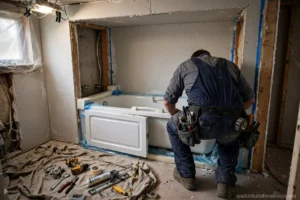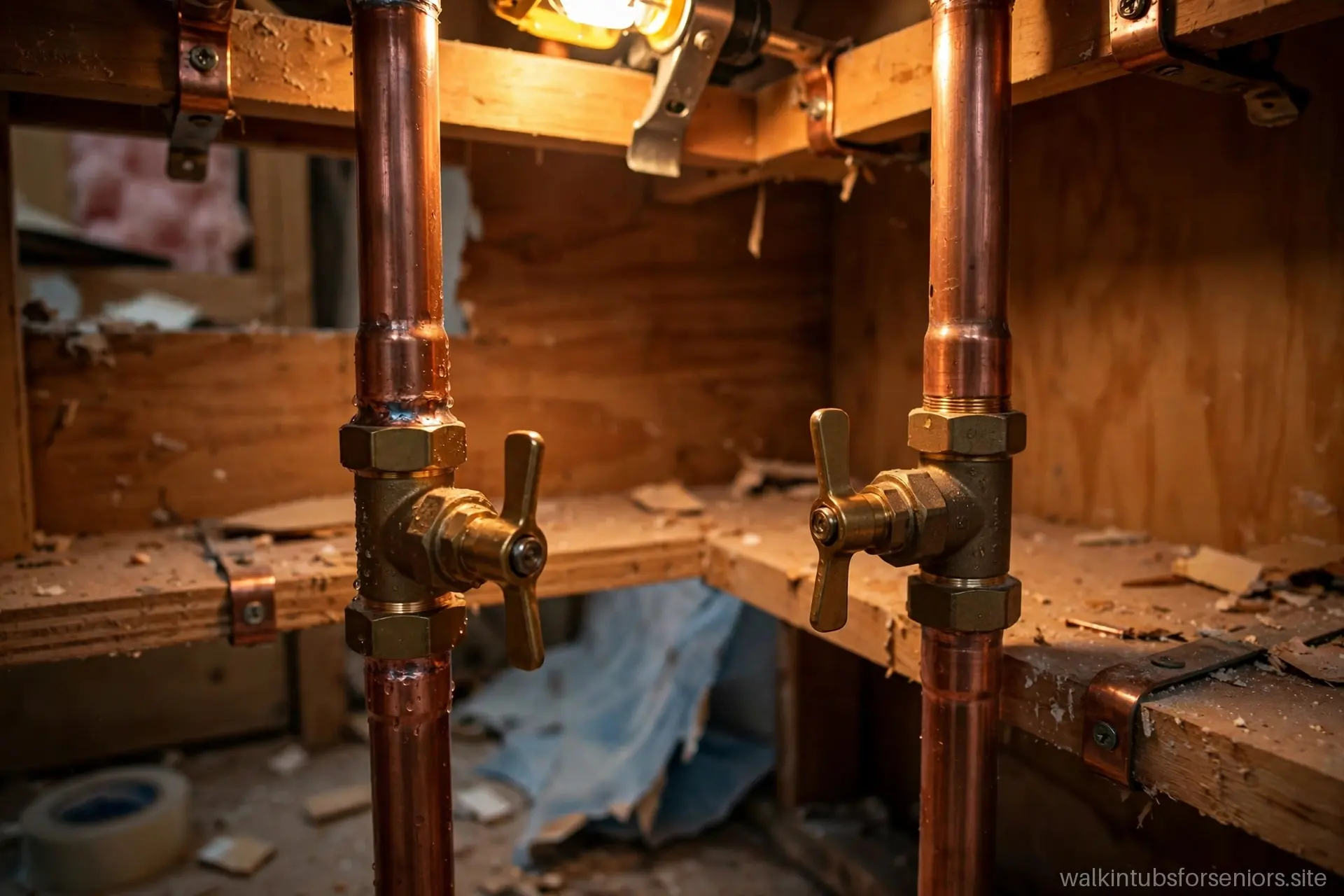
The tub is the visible part of the project; the plumbing and electrical work is the part that determines whether it functions safely for the next twenty years. Walk-in tubs have specific requirements — drain placement, water supply, and for jetted or heated models, dedicated electrical circuits — that your bathroom may or may not already satisfy.
This guide explains those requirements in plain language so you can have an informed conversation with your installer and electrician, and so no requirement becomes a surprise change order. This is general information, not a substitute for a licensed professional’s assessment of your home.
Drain requirements
Walk-in tubs use a standard-sized drain connection, but the drain’s position rarely matches your old tub exactly — tub shells differ, and the drain must sit directly under the tub’s drain outlet. Moving a drain in the floor is routine work when there is accessible space below (a basement or crawlspace), and more labor-intensive on a concrete slab, where it means cutting concrete. Your installer should verify the drain location against the tub’s specification sheet before demolition day, not discover the mismatch during it.
Drain capacity matters too, especially with fast-drain systems that empty the tub quickly. Your home’s drain line must accept the flow without backing up or gurgling — a plumber can verify this, and it is one of the quiet checks that separates thorough installers from fast ones.
Water supply lines
Walk-in tubs need hot and cold supply lines like any tub, but with a twist: because you fill the tub while seated inside it, fill speed matters more than with a standard tub. High-flow tub fillers and properly sized supply lines shorten the wait. If your home has older, narrow, or corroded supply pipes, the plumber may recommend upgrading the run to the bathroom — worth doing while walls are open.
Water heater capacity deserves a thought. Walk-in tubs hold a substantial volume of water, and a small or aging water heater may struggle to deliver a full hot fill, especially back-to-back baths. If your heater is marginal, discuss it with the plumber before installation — options range from a larger tank to a point-of-use booster, each with its own cost.
Anti-scald protection
Quality walk-in tubs include anti-scald (temperature-limiting) valves that cap the maximum water temperature regardless of how far you turn the handle. This is a genuine safety feature, not a luxury: it protects against the burns that can happen when a water heater is set too high or when someone else in the house flushes a toilet mid-bath and the cold pressure drops. Confirm the valve is present and correctly adjusted at installation — it is a five-minute check with a thermometer at the tap.
Electrical: what needs power
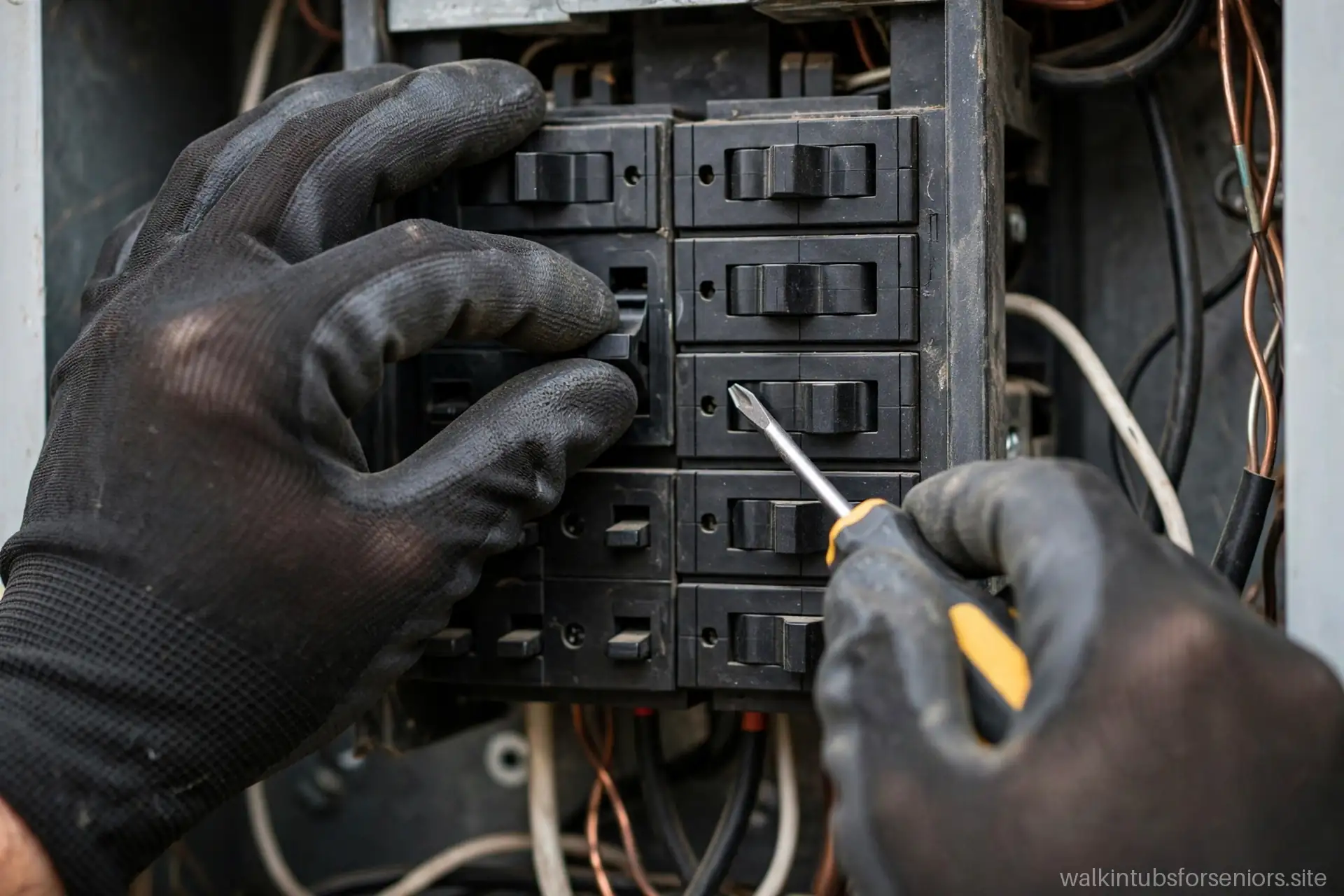
Basic soaker tubs may need no electricity at all. Everything else does: whirlpool pumps, air blowers, heated seats, and chromotherapy lighting all draw power. The standard requirement is a dedicated GFCI-protected circuit — dedicated meaning nothing else shares it, GFCI meaning it shuts off instantly if it detects a ground fault, which is the essential shock protection in a wet environment.
“Dedicated” is not a suggestion. Sharing the tub’s circuit with bathroom outlets or lighting risks nuisance tripping (annoying) or overloading (dangerous). If your electrical panel is full, the electrician may need to add a subpanel or tandem breakers — a legitimate added cost to get in writing upfront.
GFCI protection, explained simply
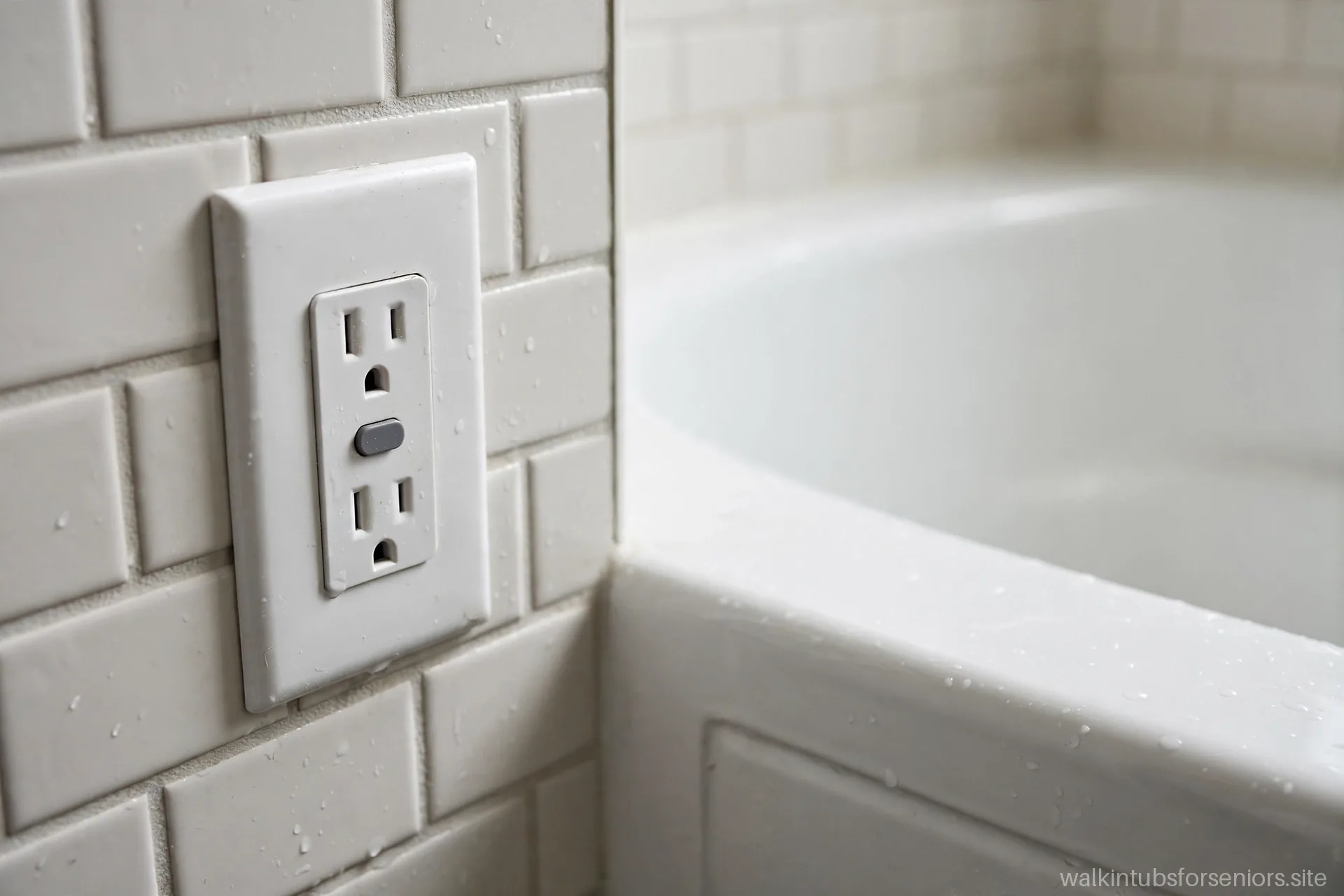
A ground-fault circuit interrupter monitors the electricity going out and coming back on a circuit. If even a tiny amount leaks — say, through water to a person — it cuts power in a fraction of a second. In a bathroom, where water and electricity are in close proximity, GFCI protection is what stands between a fault and a tragedy. It is required by electrical code for bathroom circuits in most jurisdictions, and any installer who suggests skipping it should be replaced, not negotiated with.
Who does what: plumber vs. electrician
In many installations, one remodeling contractor coordinates both trades; in others, you hire them separately. Either way, verify that each person doing the work is licensed for their trade in your jurisdiction and insured. Ask who pulls the permits and who schedules inspections — “we’ll figure it out” is not an answer. Get the electrical scope (new circuit? panel work? outlet additions?) as a separate written line item so it cannot quietly double mid-project.
Understanding these requirements also sharpens your tub choice: the electrical work is part of why jetted models cost more to install than soakers. Our air bath vs. whirlpool comparison details the system differences, and 10 questions to ask before choosing helps you weigh the full decision.
Older homes: special considerations
Houses built before the 1980s bring a special set of plumbing and electrical considerations to a walk-in tub project. Galvanized steel supply pipes, common in mid-century homes, corrode from the inside — water flow that was adequate for a 1970s tub may be marginal for a high-flow walk-in filler, and the plumber may recommend replacing the run while walls are open. Cast-iron drain lines can be sound or scaled nearly shut; a camera inspection of the drain line before installation day is inexpensive insurance against mid-project discoveries.
Electrically, older homes may have fuse boxes or early breaker panels with no room for a new dedicated circuit, and some still contain knob-and-tube or aluminum wiring that complicates new circuit additions. None of this is a deal-breaker — electricians solve these problems daily — but each adds cost and time that should be in the quote, not discovered as a change order. A pre-project assessment by both trades, looking specifically at the age-related issues, is the best money an older-home buyer spends. If your home predates 1978, also confirm the contractor follows lead-safe work practices when disturbing old paint and plaster.
Permits and inspections: what to expect
Permit requirements vary enormously by locality — from a simple over-the-counter plumbing permit to full building permits with multiple inspections — and the only reliable source is your local building department, not the internet and not the installer (though a good local installer knows the local rules cold). As a rule of thumb, replacing a fixture in the same location with plumbing modifications usually requires at least a plumbing permit; adding a new electrical circuit requires an electrical permit; and structural changes trigger building permits.
Your contract should state explicitly who pulls the permits and who schedules and attends inspections — this is the installer’s job in virtually every professional arrangement, and the permit fees should be line items in the quote, not surprises. Never accept “we do not need permits for this” at face value; verify with the building department yourself with a five-minute phone call. Unpermitted work can void homeowners insurance coverage for related claims and create expensive problems at resale, when buyer inspections flag the unpermitted bathroom. The permit is cheap; the consequences of skipping it are not.
Water heater reality check: can yours fill the tub?
A walk-in tub holds a lot of water — typically 50 to 100-plus gallons depending on size — and your water heater may not be ready for that. A standard 40-gallon tank heater, the most common size in American homes, cannot fill even a modest walk-in tub with hot water in one go; you will get a tub of lukewarm water or a long wait between partial fills. This is the most common post-installation disappointment, and it is entirely preventable with a capacity check before you buy.
Do the math simply: find your tub’s rated capacity in gallons, and compare it to your water heater’s first-hour rating (not just tank size — the first-hour rating accounts for recovery during the fill). For comfortable bathing you want the heater to deliver roughly 70 percent of the tub’s capacity as hot water, with cold mixed in for the rest. If the numbers do not work, your options are a larger tank, a tankless unit sized for the demand, or a second heater dedicated to the bathroom. Each adds cost — sometimes significant — which is exactly why this check belongs in the planning phase, not the regret phase.
Tankless heaters deserve a specific note: they are rated by temperature rise at a given flow rate, and filling a big tub fast demands a high flow rate that can exceed a smaller unit’s capacity, especially in cold climates where incoming water is frigid. Size the unit for the tub fill, not just the shower it replaced. And whatever heater you have, check its age — a heater past ten years is living on borrowed time, and replacing it proactively during the tub project (when plumbers are already on site) is far cheaper than an emergency replacement six months later. Hot water is not a luxury feature of a walk-in tub; it is the entire point. Verify the supply before you commit.
Frequently asked questions
Can the tub just plug into a bathroom outlet?
No. Bathroom outlets are typically on a shared circuit, often already loaded, and using one for a pump or blower violates the dedicated-circuit requirement. Proper installation means a new dedicated circuit from the panel.
My house has old wiring. Is that a problem?
It can be. Knob-and-tube or undersized wiring may need upgrading to support a new dedicated circuit safely, and an old panel may be full. Have an electrician assess the panel and wiring before you commit to a jetted model — this assessment is inexpensive and prevents expensive surprises.
Does water pressure affect the tub?
Low household water pressure means slower fills — more waiting inside the tub. If your pressure is chronically low, discuss it with the plumber; sometimes the fix is as simple as a pressure regulator adjustment or clearing old supply lines.
This guide is general information only — not contractor or electrical advice. All plumbing and electrical work should be performed by licensed professionals and inspected as your locality requires.