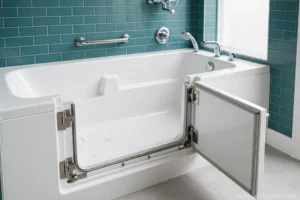
The most common complaint from new walk-in tub owners is not about the door, the jets, or the price — it is the waiting. You sit in the tub while it fills, and you sit in it again while it drains, because the door cannot open until the water drops below its top edge. Two features exist specifically to make that waiting comfortable and short: fast-drain systems and heated seats.
This guide explains how each works, what they realistically change about daily bathing, and whether they are worth the extra cost for your situation.
The waiting problem, quantified
A standard bathtub drain empties a walk-in tub in roughly 5 to 10 minutes depending on tub size and plumbing. That does not sound long until you are sitting naked in cooling water, getting progressively chillier, waiting for the level to drop those last few inches. In winter, in a cool bathroom, the wait can feel much longer than the clock says. Fast drains and heated seats attack the two halves of this discomfort: the time and the chill.
How fast-drain systems work
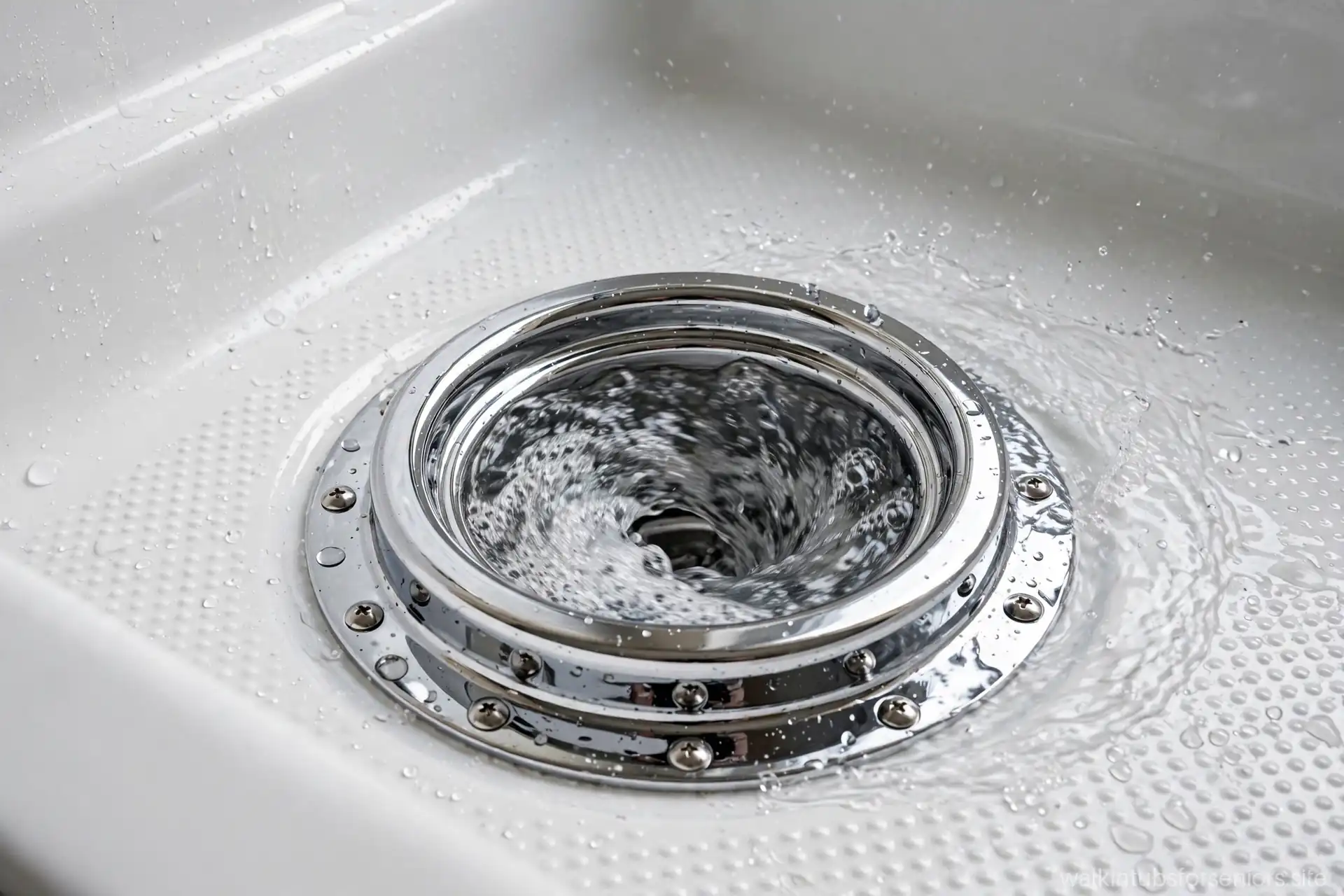
A fast drain is typically a larger-diameter drain assembly — sometimes a second drain — that empties the tub significantly faster than a standard drain, often cutting drain time roughly in half. Some systems pair the bigger drain with a pump-assisted or gravity-optimized design. The mechanism is simple and mechanical: bigger pipe, faster water exit.
What to verify: the drain must connect properly to your home’s existing drain line, and very fast drainage is only useful if your plumbing can accept the flow without gurgling or backing up. A good installer checks this. Also confirm the drain is operable from the seated position — you should be able to open it without standing or twisting awkwardly.
How heated seats and backrests work
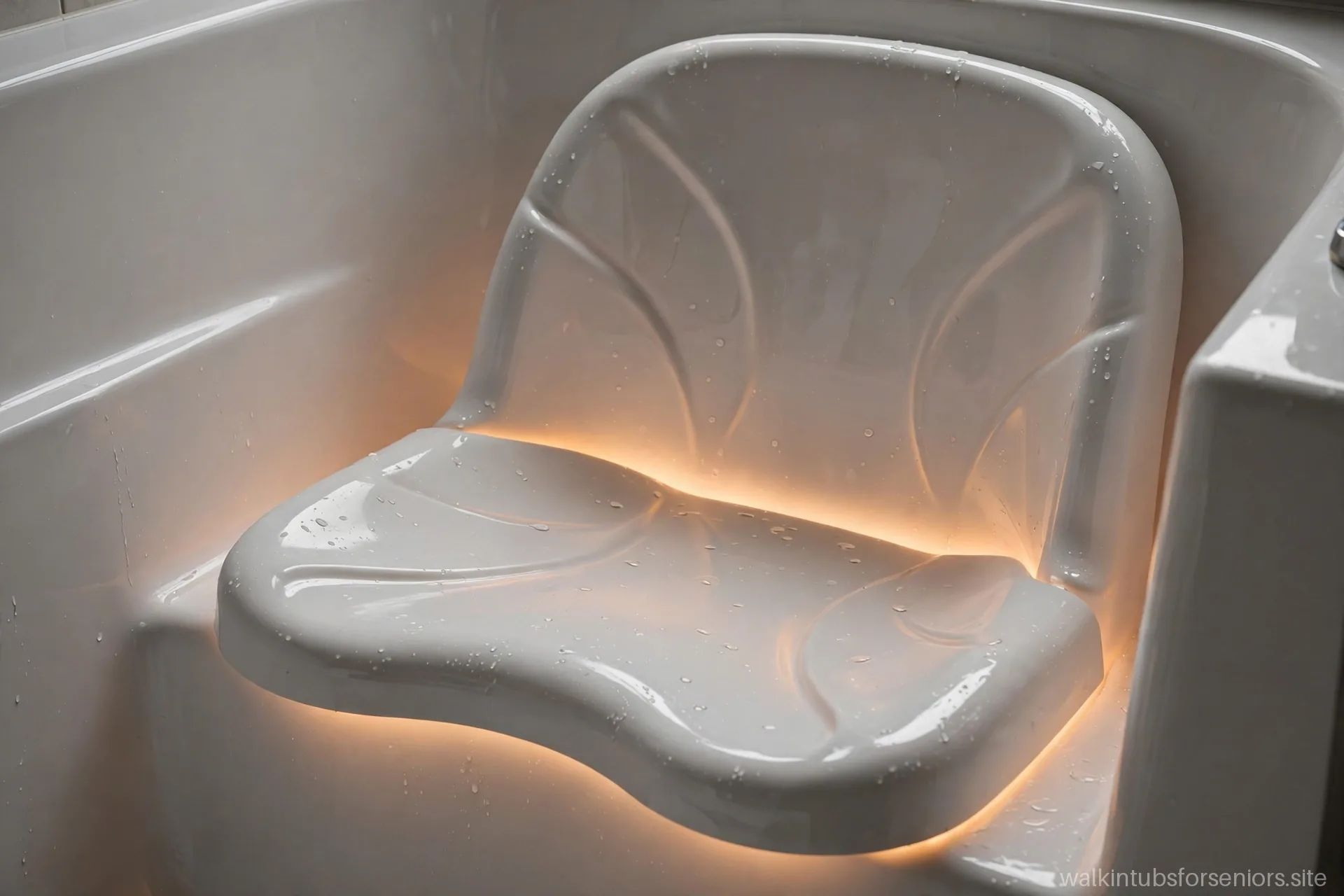
Heated seats use low-voltage warming elements embedded in the seat (and sometimes the backrest), similar to a heated car seat. You switch them on before or during the bath, and the surface warms to a comfortable temperature — not hot, just warm enough that sitting on the bare seat and waiting through fill and drain cycles stays pleasant.
The warmth matters most exactly when the tub is empty or draining: those are the moments you would otherwise be losing body heat to cool acrylic. Owners in colder climates consistently rate heated seats among their favorite features — it is one of those things that sounds like a luxury and functions like a necessity once you have it.
Are they worth the extra cost?
Consider them separately. A fast drain addresses a genuine functional annoyance and has no meaningful downside — it is close to a must-have, and many buyers say it should be standard on every tub. The extra cost is modest relative to the tub price, and there is no upkeep.
A heated seat is more of a comfort judgment call. It needs an electrical connection (usually sharing the tub’s dedicated circuit), adds to the purchase price, and is one more component that could eventually need service. But for anyone who feels the cold, bathes in an unheated bathroom, or simply wants the waiting to be pleasant rather than endured, it earns its keep daily. If your bathroom stays warm year-round and you run hot, you can skip it without regret.
All cost figures here are illustrative — manufacturers bundle these features differently, and some include them standard at higher trim levels. Compare total configured prices, not feature lists in isolation.
What else makes the wait comfortable
Beyond these two features, small habits help: run the bathroom heater or a safe space heater before your bath so the room is warm; keep a warm towel within arm’s reach for the moment you stand; and fill with comfortably warm (not scalding) water so you start the drain wait with heat to spare. An anti-scald valve — standard on quality tubs — keeps the fill temperature safe automatically.
Choosing in context
These features do not exist in isolation. A fast drain pairs naturally with a larger bariatric tub, which holds more water and drains slower. A heated seat pairs naturally with a soaker you will sit in for long, still soaks. And both features factor into the total project cost and timeline — electrical work for the heated seat is part of what your installer schedules. Our guide to how long installation takes puts the electrical and plumbing work in sequence so you know what to expect.
When you are comparing whole models rather than individual features, step back to the full decision framework in how to choose a walk-in tub: 10 questions to ask first — it helps you weigh comfort features against budget, space, and safety priorities without getting lost in option lists.
Cold-climate bathing: the full comfort stack
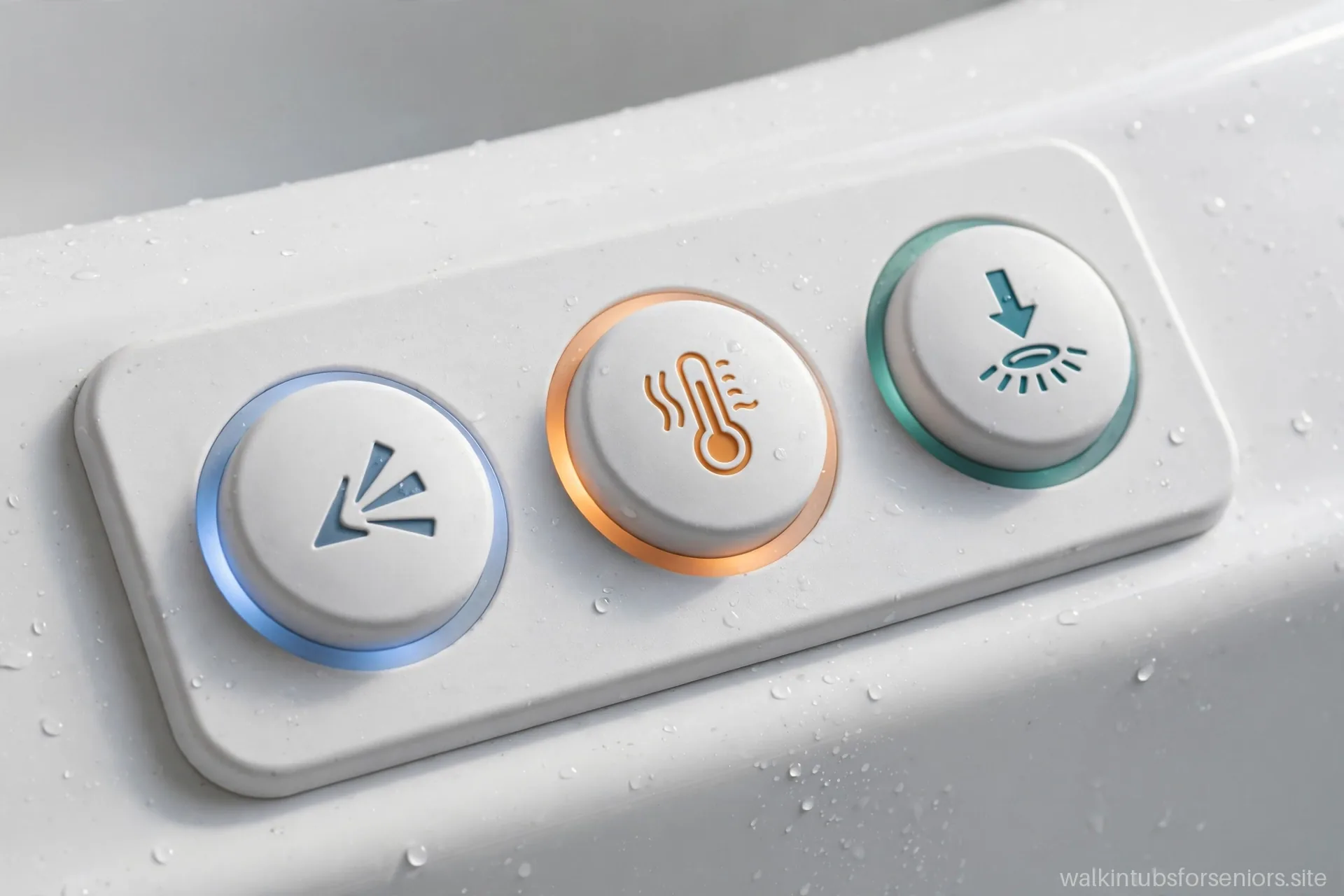
In a cold bathroom, comfort is a system, not a single feature. The heated seat warms the surface you sit on; the fast drain shortens your exposure to cooling water; but the room itself matters just as much. A bathroom that starts at 65 degrees will chill you during any wait, heated seat or not. The full comfort stack: warm the room before the bath (a safe, properly placed space heater or the home’s heating, never a heater near water), run the heated seat from the start so the surface is warm when you sit, keep a thick towel or robe within arm’s reach for the moment you stand, and close the bathroom door to hold the warmth in.
Small rituals compound the effect. Pre-warm the towel on a heated rack or in the dryer. Fill the tub a touch warmer than your ideal soak temperature, since it will cool during the fill wait — the anti-scald valve keeps this safe. And after draining, stand, wrap, and warm up promptly rather than lingering in the cooling tub. Owners in northern climates consistently say the combination of a heated seat, a fast drain, and a warm room transforms winter bathing from an endurance event into a pleasure. No single feature does it alone.
Reliability: what can go wrong
Both features are mechanically simple, which is good news for reliability. A fast drain is essentially a bigger drain assembly — no motor, no electronics, almost nothing to fail. The realistic issues are mundane: hair and soap buildup slowing it over time (a drain screen and occasional cleaning handle this) and, rarely, a seal needing replacement after many years. There is no realistic scenario where a fast drain leaves you worse off than a standard drain.
Heated seats have one electrical component — the warming element — plus its switch and wiring. Failure modes are equally undramatic: the element eventually wears out (typically after many years), a connection loosens, or the switch fails. Any of these is a service call, not a catastrophe, and the tub remains fully usable as a regular seat while you wait for repair. When comparing models, ask whether the heated seat is covered under the parts warranty and for how long — it is a standard question that signals an informed buyer and occasionally surfaces meaningful warranty differences.
Can you add these features to a tub you already own?
Buyers who already own a walk-in tub — or who bought a basic model and now covet the upgrades — often ask whether fast-drain systems and heated seats can be retrofitted. The honest answer splits by feature. Heated seats and backrests are the more retrofit-friendly of the two: aftermarket heated seat pads designed for bathtubs exist, typically low-voltage pads that adhere to the seat and backrest areas. They will not match a factory-integrated system’s even heating or clean look, and you must verify they are rated for wet environments and for your tub’s surface material — but as a comfort upgrade, they are a legitimate option at a fraction of the factory feature’s cost.
Fast-drain retrofits are harder and usually not practical. A true fast-drain system involves an oversized drain assembly, sometimes a pump, and plumbing sized for the higher flow — all of it integrated beneath and behind the tub at installation. Accessing that plumbing after the fact means opening walls or floors, and the tub’s own drain opening may not accommodate the larger assembly. In most cases, the cost and disruption of a fast-drain retrofit approaches the cost difference of having ordered it originally. The partial exception: if your slow drain is really a plumbing problem — a partially obstructed line, an undersized trap, poor venting — a plumber can often improve drain performance significantly without touching the tub, and that fix is worth pursuing regardless.
The broader lesson for current owners: comfort upgrades like heated pads, better pillows, and grab-bar additions are easy wins on an existing tub. Structural performance upgrades like drainage are usually not. And for future buyers reading this, it is one more argument for ordering the features you want upfront — retrofitting costs more, looks worse, and sometimes simply cannot be done. The showroom is the cheapest place to add a feature; the installed bathroom is the most expensive.
Frequently asked questions
Can a fast drain be added to an existing tub?
Not practically. The drain size is designed into the tub shell and its connection to your plumbing. Choose it at purchase time.
Is a heated seat safe with sensitive skin?
The elements warm the surface to a mild temperature, well below burn risk, and most have automatic shutoff timers. If you have neuropathy or reduced sensation, discuss it with your doctor — reduced ability to feel heat changes the calculation for any warming device.
Do these features use much electricity?
A fast drain uses none — it is purely mechanical. A heated seat draws modest power, roughly like a heating pad, and only while switched on. Neither meaningfully changes your electric bill.
This guide is general information only — not medical advice and not contractor advice. If you have circulation problems or neuropathy, talk to your doctor about heated bathing surfaces before you buy.