Most bathroom falls do not happen because someone is careless — they happen because wet, smooth surfaces are unforgiving. A standard bathtub’s glossy floor plus soap plus bare feet is a genuinely hazardous combination, and it is a major reason walk-in tubs exist. But not all walk-in tub surfaces are equally safe, and even the best non-slip floor stops working if it is neglected.
This guide explains how non-slip floors and seats work, what to look for when comparing models, and the maintenance habits that keep traction strong for the life of the tub.
Why traction is the foundation of tub safety
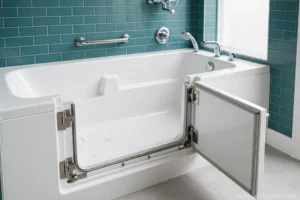
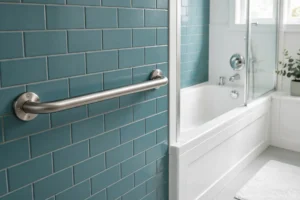
Think of tub safety as layers. The low threshold gets you in safely. The grab bars support you while you move. But the textured floor is what keeps your feet planted during every one of those movements — and during the long soak in between, when you shift position, reach for the soap, or stand up at the end. If your feet slide, the grab bars become your emergency backup instead of your steadying aid. Good traction keeps the whole system working as designed.
The National Institute on Aging lists slippery surfaces among the top home fall hazards and recommends textured, non-slip surfaces in bathing areas as a basic precaution — advice worth following whether or not you buy a walk-in tub. Their fall-prevention guidance is a solid companion to this guide.
How non-slip texture actually works
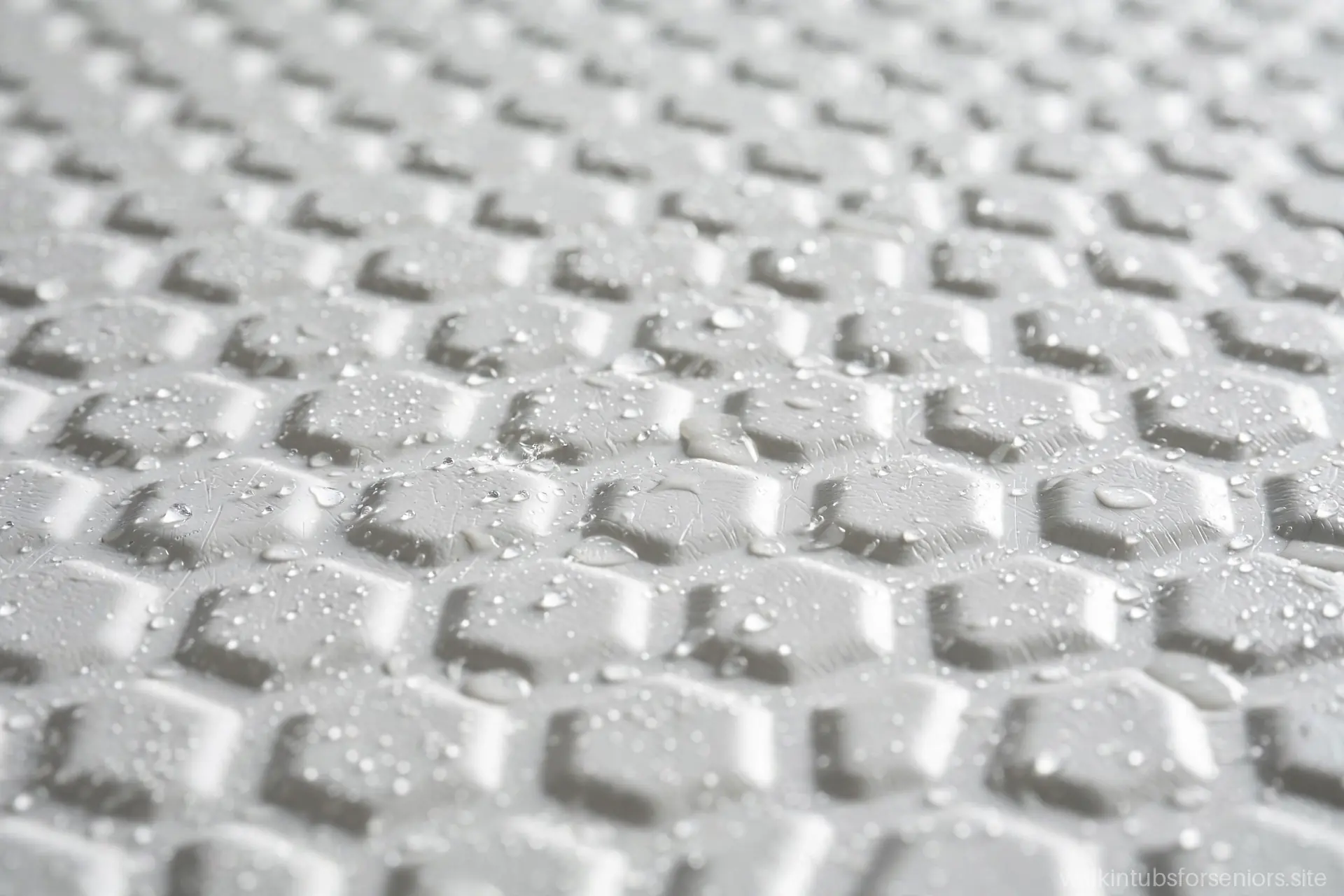
Non-slip tub floors use molded texture — tiny raised patterns in the tub shell itself — to break up the film of water and soap between your foot and the surface. Your foot contacts hundreds of small high points instead of one continuous slick plane, which dramatically increases grip. The best textures are integrated into the shell during manufacturing, so they cannot peel, wear off, or trap dirt underneath.
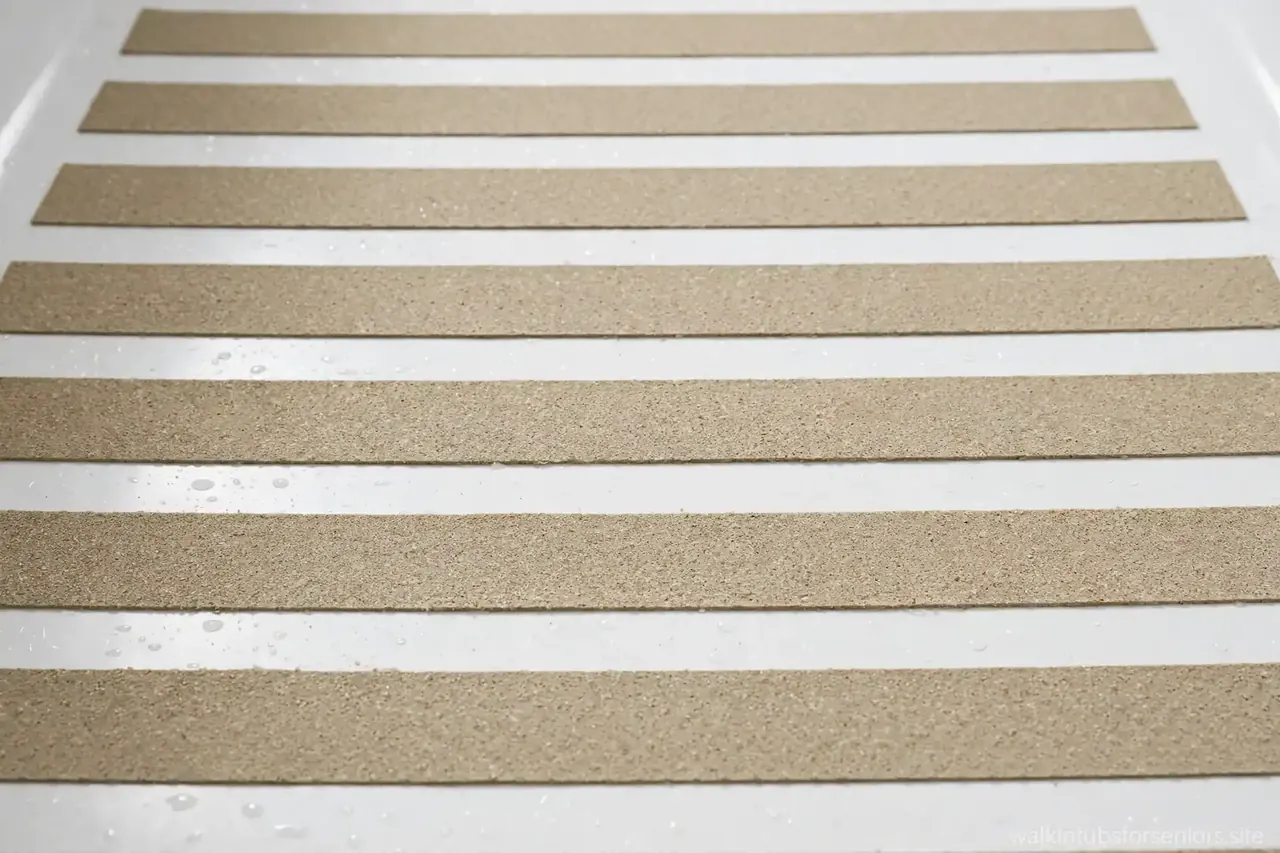
Cheaper approaches include stick-on treads and spray-on coatings applied after manufacturing. Stick-on treads work but can lift at the edges over time, creating both a trip edge and a grime trap. Aftermarket coatings vary wildly in quality. When comparing tubs, molded-in texture is the gold standard; everything else is a compromise to evaluate honestly.
Do not forget the seat
Buyers focus on the floor and forget the seat — but you lower your full body weight onto it while wet. A smooth, glossy seat can let you slide forward as you sit, which is startling and can strain your back as you catch yourself. Look for seats with the same molded texture as the floor, a contoured shape that cradles rather than perches, and ideally a slight front lip that discourages sliding.
Some models add a removable padded seat cushion for comfort. Cushions are pleasant but can reduce traction compared with the textured shell — if you use one, choose a model designed for wet grip, keep it clean, and replace it when the surface smooths out.
How to evaluate traction in a showroom
Showroom floors are dry, which makes every surface feel grippier than it will be wet and soapy. Compensate with a structured check. Run your palm firmly across the floor texture — you should feel distinct, even raised patterning, not a vague roughness. Press and twist your shoe on the surface; it should resist. Ask the salesperson specifically whether the texture is molded into the shell or applied afterward, and ask how the texture is cleaned — if the answer involves special products or delicate handling, the texture may be fragile.
Also check the tub’s entry threshold top surface. You step on it with every entry and exit, often with one foot while the other is still on the bathroom floor — a slippery threshold is a fall waiting to happen. It should be textured like the floor, not smooth.
Keeping traction strong for years
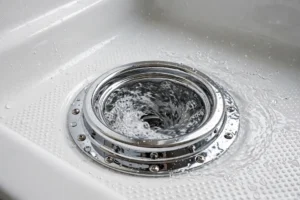
Non-slip texture fails in two ways: soap scum fills the tiny valleys between the raised points, leveling the surface; or harsh cleaners and abrasives wear the raised points down. Both are preventable. Rinse the tub after each use, wipe the floor and seat with a soft cloth, and do a deeper clean weekly with a non-abrasive bathroom cleaner. Never use scouring pads, bleach-heavy products, or petroleum-based cleaners on textured surfaces — they either erode the texture or leave their own slippery film.
Hard water adds a third enemy: mineral deposits that coat the texture in a slick, chalky layer. If your water is hard, wipe down more often and consider a water softener for the whole house — your plumbing will thank you too. If traction ever feels noticeably worse than when the tub was new despite proper cleaning, the texture may be worn and the shell may need professional refinishing or replacement of a textured insert.
Traction beyond the tub
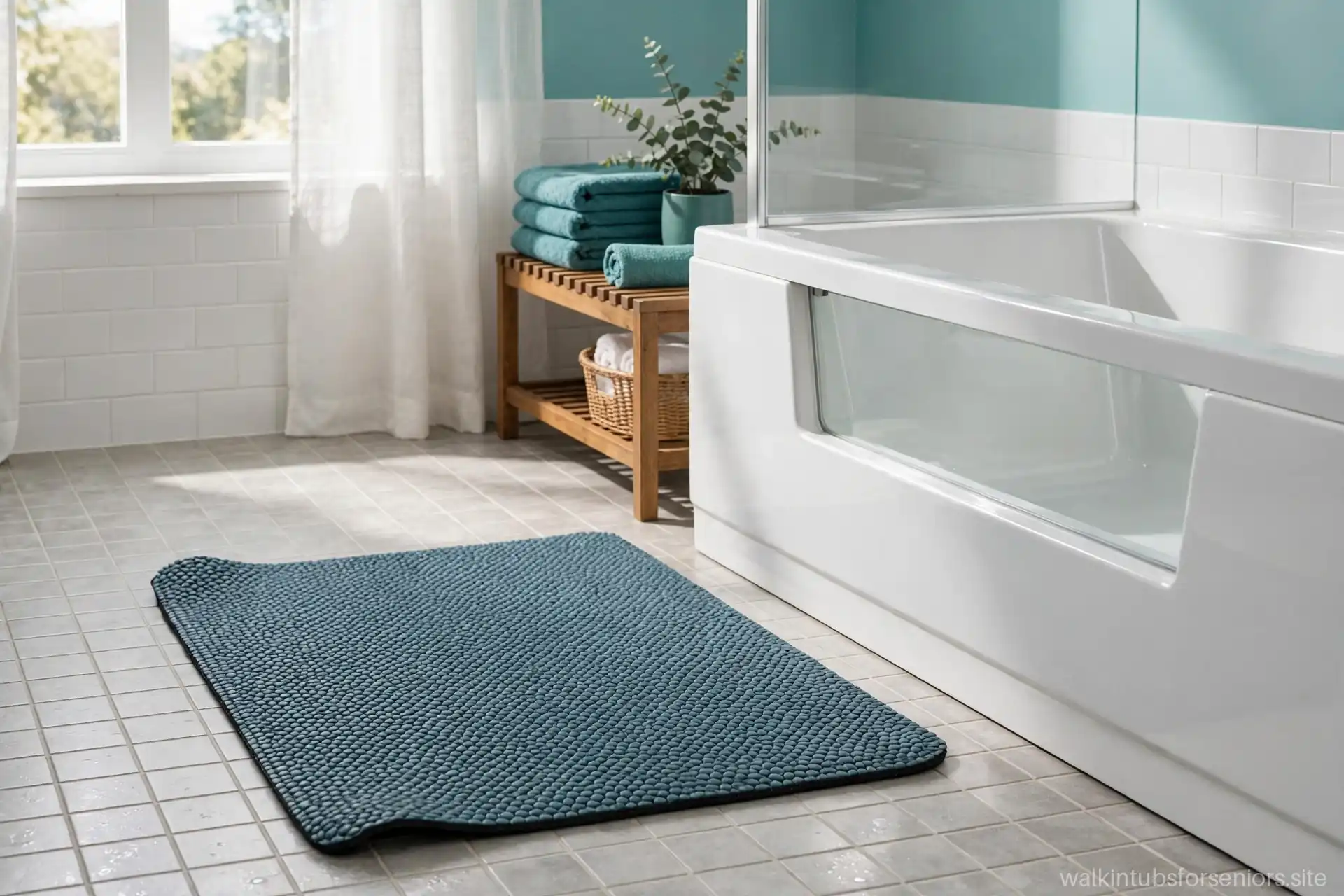
Your feet do not stop mattering at the tub’s edge. The bathroom floor between the tub and the towel, the step out of the tub, and the path to the bedroom all deserve the same thinking. Non-slip bath mats with rubber backing (not suction-cup mats that wander), textured tile or vinyl flooring, and keeping the floor dry and uncluttered all multiply the tub’s safety. Our guide to a senior-friendly bathroom on any budget shows how to layer these affordable fixes around the tub.
Traction also interacts with installation: a tub that is not set perfectly level can hold shallow puddles where texture is submerged and less effective, and poor caulking can let water reach the subfloor. Good installation is invisible when done right — our overview of plumbing and electrical requirements explains what your installer should be checking.
Bath products that destroy traction
Some bath products are traction’s quiet enemies. Bath oils and oil-based moisturizers coat textured surfaces in a slick film that water alone does not remove — if you love bath oils, use them sparingly in a textured tub and clean the floor afterward, or switch to water-soluble alternatives. Certain bar soaps leave heavier scum films than liquid body washes; if your tub floor feels slicker than it used to, the soap may be the culprit rather than worn texture. And bleach-heavy cleaners, while disinfecting, can leave their own slippery residue if not rinsed thoroughly — plus they degrade some surfaces over time.
The traction-friendly routine: a non-filming liquid cleanser for the body, non-abrasive bathroom cleaner for the tub, thorough rinsing after every cleaning, and periodic deep-cleaning of the textured floor with a soft brush to clear the valleys between the raised points. Avoid petroleum-based products entirely — they attack silicone seals as well as traction. When in doubt about a product, test it on a small area and check the tub manufacturer’s approved-cleaner list; using unapproved chemicals can void warranties as well as ruin grip.
The yearly traction audit
Once a year, give your tub’s traction a deliberate check rather than relying on gradually adjusted perception — humans adapt to slowly degrading grip until the day it fails. With the tub wet and soapy (recreate real conditions), press your bare foot firmly and try to slide it: it should resist strongly. Compare against your memory of the new tub, or better, against a written note you made at installation describing how the texture felt. Check the seat, the threshold top, and the floor — traction wears unevenly, and the highest-traffic spots go first.
If grip has clearly degraded despite proper cleaning, you have options in escalating order: professional deep-cleaning to rule out embedded film, manufacturer-approved re-texturing treatments, replacement textured inserts where the design allows, and finally professional refinishing. Document the audit with a dated note and a photo; if the tub is within warranty and the texture has genuinely failed (not just dirty), that documentation supports a warranty conversation. Traction is safety equipment — treat its maintenance with the seriousness it deserves.
Barefoot, shower shoes, or grip socks: what is actually safest
The traction conversation usually stops at the tub surface, but what is on your feet matters nearly as much. Bare feet on a quality textured surface give the best grip for most people — skin conforms to the texture and water drains through the pattern. The exception is anyone with neuropathy or fragile skin, for whom bare feet bring their own risks; and anyone whose balance is poor enough that the slight extra grip of footwear is worth its tradeoffs.
Shower shoes and bath sandals add a tread layer between foot and tub, which helps on smooth or worn surfaces but can reduce feel and proprioception — your sense of where your feet are. That lost feedback matters for balance. If you use them, choose pairs with drainage holes (trapped water underfoot is its own slip hazard), a back strap or enclosed heel so they cannot slide off mid-step, and replace them when the tread wears smooth, typically every six to twelve months of daily use. Rinse them after use; like the tub itself, they grow biofilm.
Grip socks — the kind with rubberized dots — are the worst option for a wet tub despite their popularity elsewhere. The fabric saturates, the dots lose effectiveness on a wet surface, and a soaked sock can slide on the foot itself. Save them for dry floors. Whatever you choose, keep the choice consistent: switching between barefoot and footwear changes your grip characteristics, and consistency lets your body learn exactly how each step will feel. And pair the footwear decision with the surface decision — the safest combination is a well-maintained textured tub plus the foot covering (or lack of it) matched to the bather’s feet, balance, and skin.
Frequently asked questions
Should I put a bath mat inside a walk-in tub?
Usually not necessary — the molded texture is designed to be the non-slip surface, and a mat can bunch, trap water underneath, and interfere with the door seal. If you want extra cushioning, use only mats designed for textured tub use and remove them regularly to clean underneath.
Can worn texture be restored?
Sometimes. Professional refinishers can re-texture a worn shell, and some manufacturers sell replacement textured floor inserts. Both are stopgaps compared with intact factory texture — another reason to buy quality texture in the first place and maintain it well.
Is it safer to bathe with non-slip socks or barefoot?
Bare feet on a clean textured surface generally grip best. Non-slip socks help on questionable surfaces but reduce the feedback your feet give you about slipping. Whatever you choose, keep it consistent so your body learns what to expect.
This guide is general information only — not medical advice and not contractor advice. If you have fallen in the bathroom before, discuss a full fall-risk assessment with your doctor in addition to upgrading your tub.