
Walk-in tub shopping is confusing by design: dozens of brands, walls of features, salespeople with strong opinions, and prices that seem to come from different universes. But the decision itself is simpler than the marketplace makes it look. Ten questions, answered honestly, will take you from overwhelmed to confident — and will expose the sales pitches that do not survive scrutiny.
This is general buying guidance, not a recommendation of any brand. Work through the questions in order; each builds on the last.
1. Do I actually need a walk-in tub — or something simpler?
Start here, because the honest answer is sometimes no. If your main problem is unsteadiness in the shower, a shower chair, grab bars, and a hand-held shower may solve it for a few hundred dollars. If the problem is the high tub wall specifically — stepping over it hurts, frightens, or has caused a fall — then a walk-in tub (or a tub-to-shower conversion) is the right category. Do not buy a tub to solve a problem that accessories solve.
2. Who is bathing, and what does their body need?
List the actual users and their realities: heights, weights, mobility limits, grip strength, vision, and any condition affecting bathing (arthritis, joint replacements, neuropathy, balance disorders). A tub that is perfect for a 5’2″ buyer with arthritis may be wrong for a 6’1″ buyer with a hip replacement. Larger bathers should look specifically at bariatric models — our bariatric walk-in tub guide covers wider doors, reinforced seats, and honest weight ratings.
3. Soaker, air, whirlpool, or combo?
Match the water to the bather: simple safe soaking favors a soaker; gentle bubbles favor air; targeted massage favors whirlpool. Be honest about maintenance tolerance — whirlpool jet lines need regular cleaning — and about electricity: anything beyond a soaker needs a dedicated circuit. Compare soaker, air, and whirlpool systems on feel, cost, and upkeep before deciding.
4. Inward or outward door — and does it fit my bathroom?
Emergency access needs and floor space decide this. Outward-swinging doors allow rescue access with water in the tub but need clear swing space; inward-swinging doors seal with water pressure’s help and suit tight bathrooms. Measure the swing arc with painter’s tape before deciding — never from a brochure diagram.
5. Which features are needs vs. wants?
Separate the list. Needs usually include: low threshold, textured floor and seat, well-placed grab bars, anti-scald valve, fast drain, and a hand-held shower. Wants might include: heated seat, chromotherapy lighting, aromatherapy, premium finishes. Price the needs first, then add wants deliberately — option creep is how budgets double.

6. Will it fit — the alcove, the door swing, the delivery path?
The unglamorous question that prevents the most expensive mistake. Verify the tub’s outer dimensions against your alcove, the door swing against your floor space, and the delivery path through your house — doorways, hallways, stair turns. A complete measuring checklist covers every number to take — alcove, door swing, and delivery path.
7. What will installation really involve in my bathroom?
Ask specifically: does the drain need to move? Is the subfloor sound? Does the tub need a new electrical circuit, and is my panel ready? Are permits and inspections included? Get the answers in writing as part of the quote — verbal “we’ll handle it” is how change orders are born. A step-by-step installation overview shows what each phase should look like.
8. What is the true total cost — and how am I paying?
Insist on an installed, working total: tub, delivery, demolition, plumbing, electrical, permits, surround work, and cleanup. Compare at least three written quotes on identical scope. Then choose your payment path deliberately — our financing guide compares loans, home equity, and dealer plans, including the deferred-interest traps to avoid. If coverage might help, verify any Medicare or coverage claim independently before believing a salesperson’s version.
9. What does the warranty actually cover?
Warranty length means little; warranty scope means everything. How long is the shell covered? The door seal? The pump and electronics? Is labor included, and for how long? Who do you call — the dealer or the manufacturer — and are parts actually available? Learn to read warranty fine print like a skeptic — shell, parts, and labor terms differ enormously.
10. Who am I buying from — and will they exist in five years?
A walk-in tub is a 15-to-20-year fixture, and its warranty is only as good as the company behind it. Favor established manufacturers with reachable customer service and parts availability over the cheapest bid from a company you cannot research. Check reviews specifically about service after installation — anyone can sell a tub; not everyone fixes one.
Putting your answers together
Write your answers down — literally, on paper. The pattern that emerges is your specification: tub style, door type, must-have features, size constraints, installation scope, budget, and company criteria. Bring that sheet to every showroom and every quote appointment. Salespeople respect prepared buyers, and prepared buyers make better decisions.
And keep perspective: the goal is safer, more comfortable bathing for years — not the perfect tub. A well-chosen mid-range tub, professionally installed, beats a maxed-out luxury model with a sloppy install every time.
Red flags in showrooms and sales pitches
Learn to recognize the tactics that signal a dealer to avoid. Manufactured urgency: “this price expires today” — legitimate dealers honor fair prices next week. Medicare misdirection: any claim that Medicare covers the tub or that the tub is “Medicare-approved” — there is no such approval, and coverage claims should be verified independently. The disappearing quote: verbal numbers that change when written down, or quotes that omit major scope items (electrical, permits, surround work) to look cheaper than competitors. Health scare selling: graphic fall stories deployed to rush your decision — safety is a legitimate concern and also a manipulation tool; slow down when you feel frightened.
Credential fog: impressive-sounding certifications that do not correspond to anything verifiable, or “factory-trained” claims with no factory named. The full-payment demand: reputable installers take a reasonable deposit with the balance tied to milestones, not the entire sum upfront. And the lonely decision: any dealer who discourages you from getting competing quotes, consulting family, or sleeping on it. The right response to every red flag is the same: thank them, leave, and give your business to a dealer who welcomes scrutiny.
The decision timeline: a sample six-week plan
Rushed decisions are regretted decisions; this timeline keeps you moving without hurrying. Weeks 1–2: research. Read the guides, list your household’s needs, measure your bathroom, and decide the tub style and door type in principle. Week 3: showrooms. Sit in models, operate doors and controls, listen to jets, and collect specification sheets — but buy nothing. Week 4: quotes. Get three written, itemized quotes on identical scope from licensed installers or dealer-installers, and verify licenses and insurance.
Week 5: verification. Check financing or coverage independently, read the warranty fine print for your shortlisted models, call references, and confirm delivery and installation timelines in writing. Week 6: decide. With quotes, warranties, and timelines in hand, choose — then schedule installation with the deposit structure in the contract. Six weeks feels slow in the moment and fast in retrospect; the buyers who regret their purchase are overwhelmingly the ones who compressed this into six days.
The second opinion: who to ask before you sign
After weeks of research, the final decision benefits enormously from one outside voice — someone with no commission riding on your choice. The best second opinion comes from a professional who understands both bodies and bathrooms: an occupational therapist, particularly one experienced in home modifications, can assess the bather’s needs against your shortlisted models in a single visit and often spots mismatches you have stared past for weeks. Many work privately for a modest consultation fee, and the cost is trivial against a five-figure purchase.
Your second-best second opinion is a plumber or contractor with no tie to any tub dealer — someone who installs bathrooms for a living and will tell you which brands generate callbacks and which sail through. Ask specifically: what breaks, what do the warranties actually honor, and which models would you put in your own mother’s house? Tradespeople answer that last question honestly, and the answer is worth more than any brochure. A knowledgeable friend or family member who has been through the purchase themselves is the third option — lived experience, freely given.
Time the second opinion for when you have narrowed to two finalists, not when you are drowning in ten options — the advisor’s job is to break the tie, not restart the search. Bring your quotes, your measurements, and your honest account of the bather’s needs and daily routine. And listen with genuine openness: if the second opinion contradicts your leaning, investigate the disagreement rather than dismissing it. The goal is not validation of a decision already made; it is a decision you can defend to yourself for the next twenty years.
Frequently asked questions
How long should the decision take?
Weeks, not days. Research, showroom visits, three quotes, and verification of coverage or financing take time — and high-pressure “decide today” tactics are a signal to walk away, not to hurry.
What should I do in a showroom?
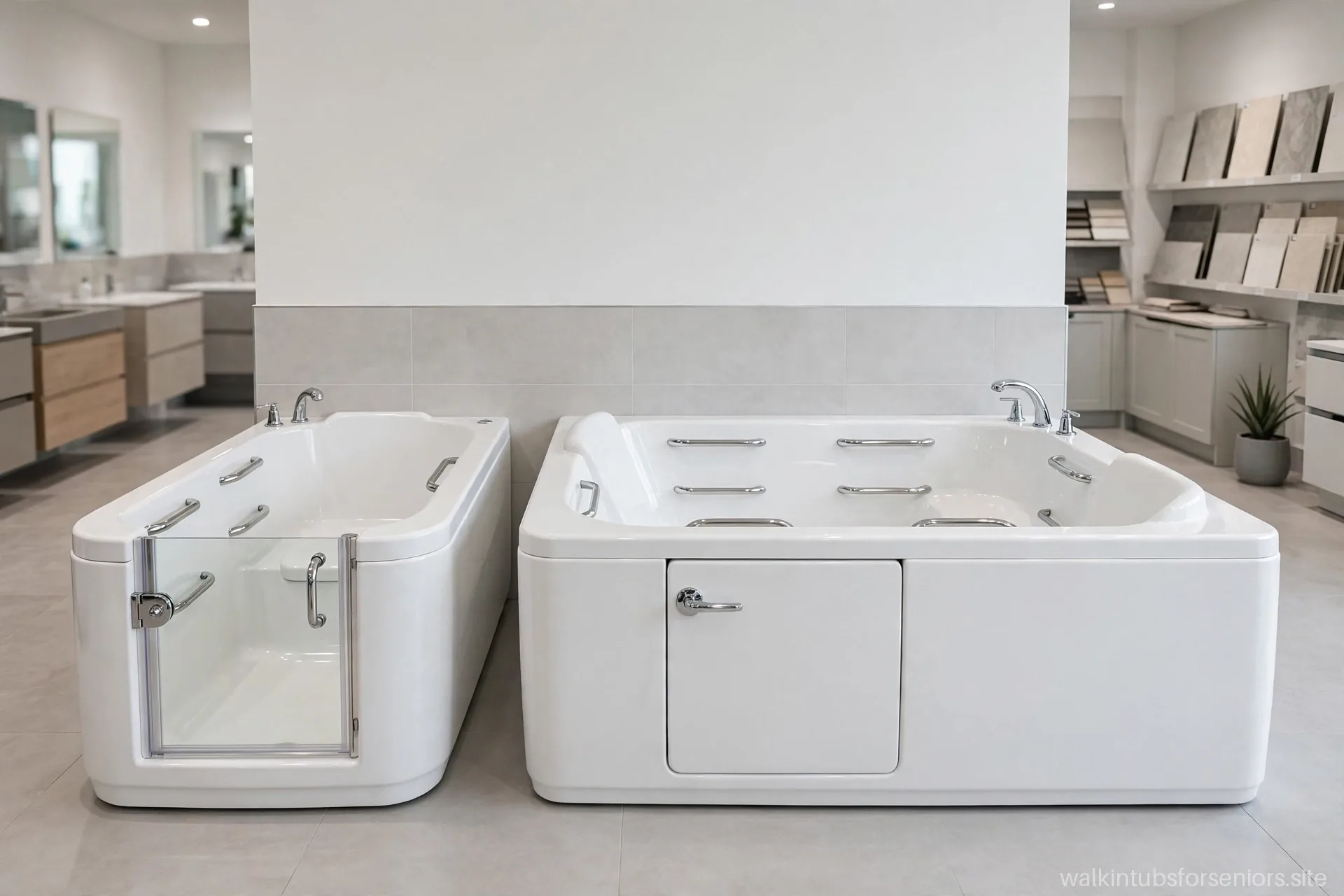
Sit in the tub. Operate the door latch with wet-feeling hands (bring a damp cloth if you are bold). Pull the grab bars hard. Ask to hear the jets. Check control reach from the seated position. A showroom visit is a test drive — act like it.
Can I buy a walk-in tub online?
You can, but arrange professional local installation separately and verify the warranty’s service terms for your area. The lowest online price with no local service network is a gamble on a 20-year fixture.
This guide is general information only — not medical, financial, or contractor advice. Take your time, get everything in writing, and consult professionals for your specific situation.