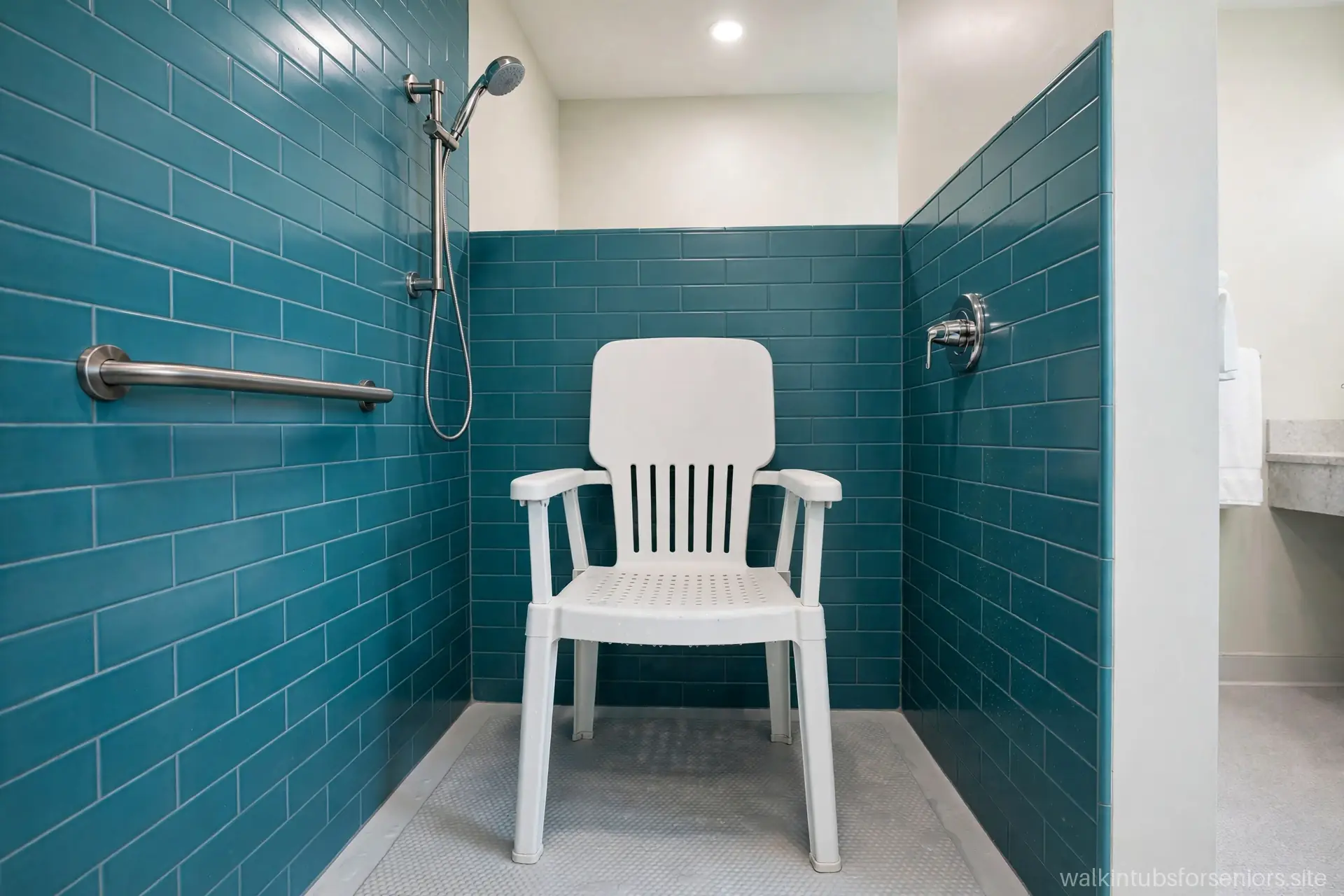
A walk-in tub solves the biggest single hazard in the bathroom — the high tub wall — but the bathroom has more hazards than one fixture. The supporting cast of safety accessories is what turns a safer tub into a genuinely safe bathroom: the shower chair that lets you bathe seated during recovery, the raised toilet seat that saves your knees twice a day, the hand-held shower that makes seated bathing practical.
This guide covers the accessories worth having, how to choose each one, and the installation mistakes that turn safety equipment into hazards. Prices are discussed in illustrative terms only.
Shower chairs and stools
A shower chair lets you bathe seated in any shower or tub — essential after surgery, during illness recovery, or whenever standing stamina is limited. Choose a chair rated above the user’s weight, with non-slip rubber feet, a backrest if trunk support is needed, and drainage holes in the seat so water does not pool. Height-adjustable legs let you set the seat at a level that makes standing up easy. Place the chair before turning on the water, test its stability, and replace it if the feet wear smooth or the frame wobbles.
Transfer benches
A transfer bench straddles the tub wall: you sit on the outside portion, slide across into the tub, and lift your legs over — never standing on one leg on a wet surface. For people who are not ready for a full tub replacement, a transfer bench plus a hand-held shower is the classic interim solution, and it is also useful during the weeks after joint surgery. The bench must be level, rated for the user’s weight, and positioned so the inside portion does not interfere with the drain.
Raised toilet seats and safety frames
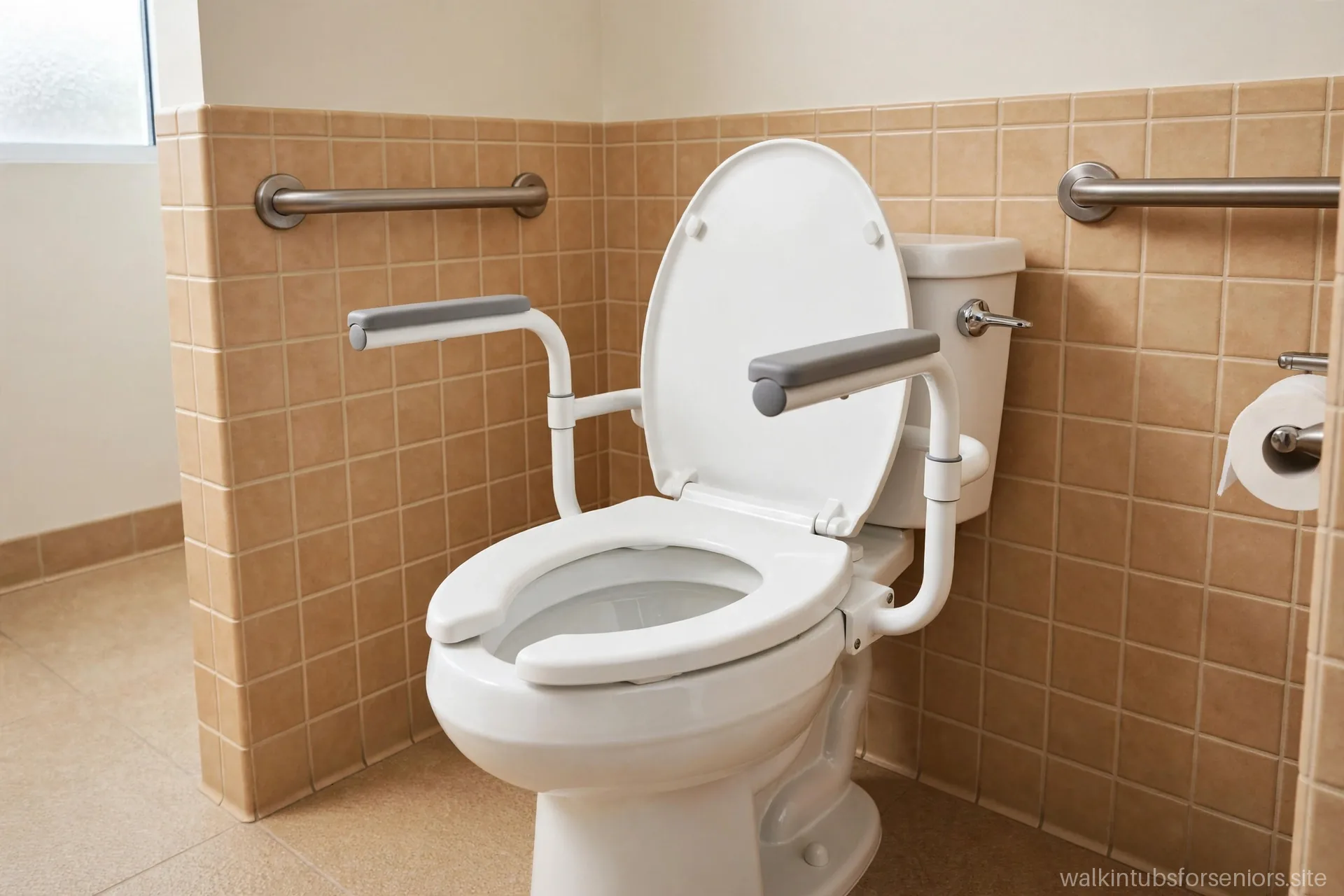
A raised seat adds a few inches of height, bringing the toilet closer to chair height and dramatically easing the sit-to-stand motion. Models with integrated armrests add push-up support. Alternatively, a floor-standing safety frame around the existing toilet provides arms without changing the seat. Whichever you choose, verify stability — a wobbling raised seat is worse than none — and check weight ratings honestly.
Hand-held showers
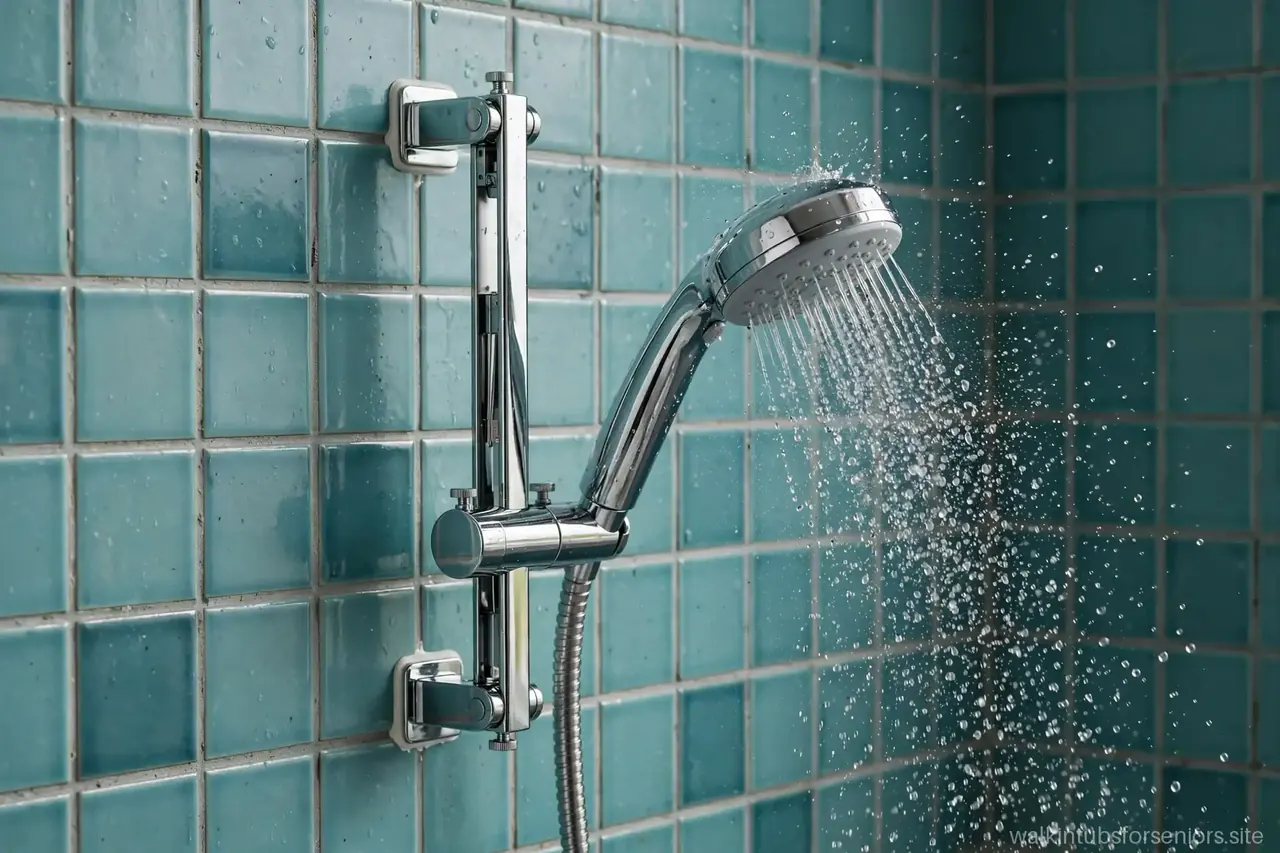
A hand-held shower on a slide bar or hook is one of the highest-value accessories in the bathroom: it enables seated bathing, makes rinsing easier for caregivers, helps clean the tub itself, and is useful for washing pets or feet. Look for a long, flexible, kink-resistant hose, a slide bar that adjusts to seated height, and a diverter that switches easily between the fixed head and the wand. Installation is usually simple, but the slide bar must anchor to studs or rated anchors.
Grab bars (again, because they matter that much)
Every accessory on this list works better alongside properly placed grab bars — at the tub, the toilet, and anywhere you transition between sitting and standing. Bars must anchor to studs or structural backing, never to drywall alone and never to a fiberglass surround without the manufacturer’s designated backing points. Our complete guide to walk-in tubs explains the low-threshold fixture these accessories pair with — start there if you are weighing the full upgrade.
Mats, rugs, and what to avoid
Outside the tub: a bath mat with a true rubber backing (it should grip the floor when you push it with your foot) or no mat at all — loose rugs are a classic trip hazard. Inside a textured walk-in tub, skip the mat; the molded texture is the non-slip surface. Avoid suction-cup grab bars as primary support (they are balance aids, not fall protection), avoid using towel bars for support (they will pull out), and avoid bath oils that make every surface treacherous.
Putting together your accessory plan
Start with a walkthrough: watch (or imagine) the full routine — entering the bathroom, using the toilet, bathing, drying, dressing, exiting — and note every moment of unsteadiness or effort. Match accessories to those moments rather than buying a generic kit. Many buyers find that a thoughtful set of accessories plus a walk-in tub covers nearly every risk; our non-slip surfaces guide completes the picture on traction.
Budget-wise, most accessories are modestly priced individually — illustratively tens to low hundreds of dollars each — which makes them the rare safety upgrade with an excellent cost-to-benefit ratio. Prioritize the toilet and bathing zones first.
Safety on the road: travel and temporary setups
Bathroom safety does not stay home when you do. A compact travel kit — a folding shower stool, a set of high-quality suction-assist bars (as balance aids only, never primary support), a non-slip bath mat with rubber backing, and a portable hand-held shower that attaches to a standard shower arm — fits in a small bag and transforms an unfamiliar hotel bathroom from a gamble into a manageable space. Call ahead: many hotels have accessible rooms with roll-in showers and grab bars, but “accessible” varies wildly, so ask specifically what the bathroom contains rather than accepting the label.
For temporary situations at home — post-surgery recovery, a visiting elderly parent — the same kit plus a clamp-on raised toilet seat covers most needs without permanent changes. Renting medical equipment (shower chairs, transfer benches, commodes) from a local medical-supply store is often cheaper than buying for short-term use, and the staff can advise on sizing. The principle is the same as at home: match the equipment to the specific moments of unsteadiness, install or place everything before it is needed, and test it while someone is nearby.
Maintaining your accessories
Safety equipment degrades, and degraded safety equipment is a hazard wearing a disguise. Quarterly, inspect every accessory: rubber feet and tips for wear (replace when smooth — they are cheap), frames for wobble, rust, or cracks, plastic seats for stress cracks around mounting points, suction cups for loss of grip, and fabric or padded components for mildew. Tighten any loose fasteners, and retire anything that cannot be made solid — a wobbling shower chair belongs in the trash, not in the shower.
Clean accessories with the tub: non-abrasive cleaner, thorough rinsing, and complete drying to prevent mildew in crevices. Keep the manufacturer’s weight-rating labels legible, and re-check ratings if the user’s weight has changed. Store spares of wear items (rubber tips, suction cups) so replacement is immediate rather than postponed. This maintenance takes perhaps twenty minutes four times a year — a trivial price for equipment your safety depends on daily.
When to replace: the lifespan of every accessory
Safety accessories do not last forever, and a worn-out aid can be worse than none — it invites trust it can no longer earn. Here is a realistic replacement schedule. Shower chairs and transfer benches: inspect monthly, replace every three to five years, sooner if any rubber tip wears through, any joint wobbles, or the seat cracks. Rubber tips and suction feet are consumables — replace the tips yearly, because a chair with one worn tip rocks, and a rocking chair teaches distrust of the whole setup.
Raised toilet seats and safety frames: three to five years, with immediate replacement if clamps loosen and cannot be tightened to full rigidity. Hand-held showerheads and hoses: the head lasts years, but the flexible hose is the weak point — replace hoses every two to three years or at the first sign of kinking, stiffness, or seepage at the connections, because a burst hose at full pressure is its own hazard. Bath mats with suction cups: six to twelve months; once cups stop gripping or the backing degrades, the mat becomes a sliding sheet. Non-slip adhesive treads inside the tub: one to two years depending on the product, replaced when edges lift.
Build the schedule into a routine: pick a memorable date — a birthday, the daylight-saving change — and spend fifteen minutes testing every accessory. Tug each grab bar, wobble each chair, flex each hose, check each mat’s grip. Replace proactively, not after a scare. And keep receipts and model numbers in one folder; when a chair finally needs replacing, reordering the identical model avoids relearning a new design. Accessories are a system, and systems need maintenance calendars — yours just happens to be written on the calendar you already own.
A practical habit that extends every accessory’s safe life: buy consumable spares before you need them. An extra set of rubber tips for the shower chair, a spare hand-held shower hose, a backup bath mat — stored in a closet, they convert a failure from a crisis into a five-minute swap. Tips and hoses are inexpensive, and having them on hand removes the temptation to keep using a compromised accessory “until the weekend.” When you replace a consumable, order its replacement the same day; the spare shelf should never sit empty.
Also keep the original manuals or a photo of each accessory’s model label. Three years from now, when the transfer bench needs new tips, the model number gets you the exact-fit part instead of a hopeful guess at the hardware store. A single envelope or phone album holding every accessory’s documentation is the kind of boring organization that pays off precisely when memory fails — which, for most of us, is exactly when the part is needed.
Frequently asked questions
Will insurance cover safety accessories?
Sometimes, partially. Some Medicare Advantage supplemental benefits and Medicaid waiver programs cover certain home-safety items; Original Medicare generally does not cover them as DME without specific qualification. Check your plan documents — and keep receipts regardless, since some costs may be tax-relevant with professional advice.
What can renters use?
Non-permanent options: shower chairs, transfer benches, raised toilet seats that clamp on, hand-held showers that attach to the existing arm, and floor-standing safety frames. Get landlord approval in writing for anything that drills into walls.
When should accessories be replaced?
When rubber feet wear smooth, when frames wobble or show corrosion, when plastic seats crack, and when weight ratings no longer match the user. Inspect accessories quarterly — they are safety equipment, not furniture.
This guide is general information only — not medical advice. For personalized recommendations after surgery or with a progressive condition, consult your doctor, physical therapist, or occupational therapist.