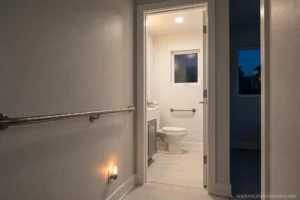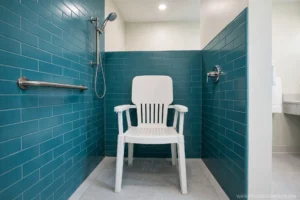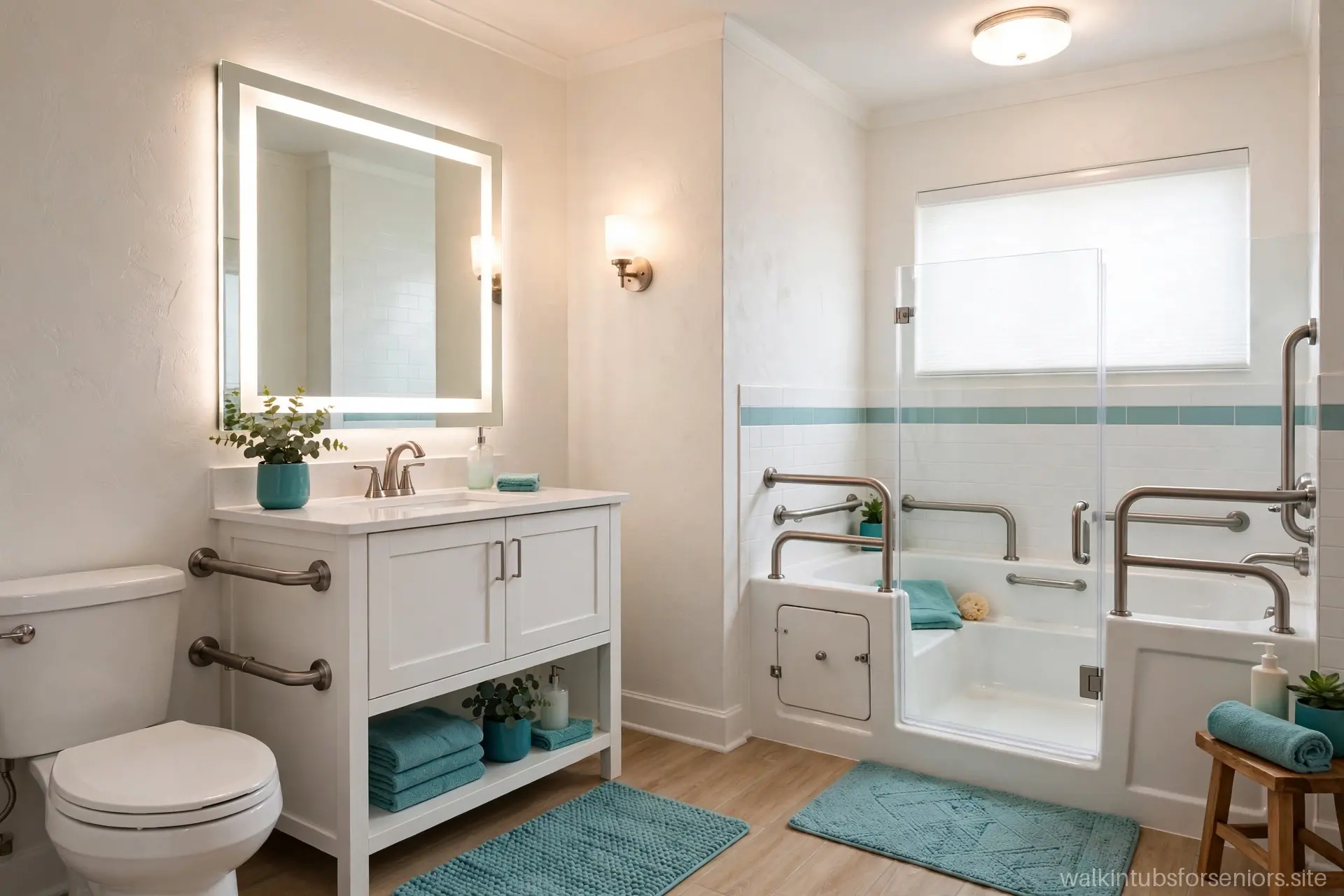
You can install the safest tub in the world and still fall on the way to it in a dim hallway, or slip on glossy tile with wet feet. Lighting and flooring are the bathroom’s background safety systems — unglamorous, often overlooked, and responsible for a large share of preventable falls. The National Institute on Aging specifically calls out poor lighting and slippery floors among the top home hazards for older adults.
This guide covers what to look for in bathroom lighting and flooring, which options suit senior households best, and how to upgrade each without a full remodel. Costs are discussed in illustrative terms.
Why lighting matters more than you think
Vision changes with age: less light reaches the retina, contrast sensitivity drops, and eyes adapt more slowly when moving between bright and dark areas. A bathroom that was “fine” at 40 can be genuinely hazardous at 75 — not because the bathroom changed, but because the eyes did. Good bathroom lighting compensates: bright, even, glare-free illumination that lets you see water on the floor, read medication labels, and navigate confidently at 3 a.m.
The three layers of bathroom lighting
Ambient light: the base layer
Overhead lighting should make the whole room evenly bright with no dark corners. A ceiling fixture with a diffuser (frosted cover) spreads light softly; bare bulbs create harsh shadows and glare. If your bathroom has a single dim fixture, upgrading it is the highest-impact lighting change you can make.
Task light: where you need detail
Vanity lighting at face level — sconces on either side of the mirror, not just a bar above it — eliminates the shadows that make shaving, makeup, and contact-lens handling difficult. Light inside or above the shower/tub area (rated for wet locations) lets you see what you are doing while bathing.
Night lighting: the 3 a.m. layer
Most falls happen at night, and the path from bed to bathroom is the danger zone. Motion-activated nightlights in the hallway and a low-level bathroom nightlight let you navigate without flipping on blinding overheads — which wreck your night vision and your sleep. Keep the path consistent: the same lights, in the same places, every night, so navigation becomes automatic.

Practical lighting upgrades
High-impact, low-cost moves: replace dim bulbs with brighter LEDs (check the fixture’s maximum wattage-equivalent), add motion-sensor nightlights along the bed-to-bathroom path, install a lighted switch or motion-sensor switch so you never enter a dark bathroom, and clean fixture covers — dusty diffusers can cut light output surprisingly. Avoid glossy surfaces that create glare, and position lights to avoid shining directly into the eyes of someone seated on the toilet or in the tub.
Flooring options for senior bathrooms
The ideal bathroom floor for a senior household: water-resistant, textured for grip when wet, comfortable underfoot, and easy to clean. How the common options compare:
Textured vinyl or luxury vinyl tile: the pragmatic winner for most senior bathrooms — affordable, water-resistant, available with real surface texture, warmer and softer underfoot than tile, and easy to replace. Illustratively, one of the lowest-cost professional installs per square foot.
Textured ceramic or porcelain tile: durable and water-resistant, but hard underfoot (a fall onto tile hurts more) and cold. If you choose tile, insist on a textured, slip-resistant finish — glossy tile in a senior bathroom is a mistake — and consider radiant floor heating if the budget allows.
Sheet linoleum: similar virtues to vinyl with a different look; seamless sheets mean fewer grout lines to clean and fewer trip edges.
Avoid: glossy tile, polished stone, and any flooring that gets slick when wet. Whatever you choose, keep it in good repair — curling edges and cracked tiles are trip hazards regardless of material.
Transitions and thresholds
The doorway between hallway and bathroom often has a raised saddle or a height change between flooring types — a classic trip point, especially in low light. Bevel it, ramp it, or eliminate it during any flooring project. Inside, keep the floor clear: no cords across the path, no clutter, and bath mats only with true rubber backing or none at all.
Flooring and fixture choices interact: a walk-in tub’s low threshold is only fully effective if the floor you step onto is also safe. Our soaker vs. hydrotherapy comparison helps with the tub decision itself, while fast drains and heated seats cover the comfort features that make the bathing experience pleasant once the room is safe.
Smart-home touches for the bathroom
A few inexpensive smart devices solve old bathroom problems elegantly. Motion-sensor light switches mean never entering a dark bathroom and never fumbling for a switch with wet hands — the light is simply on when you are there. Smart nightlights with motion sensing cover the hallway path without any wiring. Voice-controlled lighting helps anyone with limited hand mobility or vision: “turn on the bathroom light” from bed before the nighttime trip. And a smart water-leak sensor under the tub or toilet — a small puck that alerts your phone at the first sign of moisture — catches the slow leaks that rot subfloors silently for years.
Keep the smart layer simple and reliable: choose devices with local control that work even if the internet is down (motion sensors should trigger lights without cloud round-trips), favor established brands with long support histories over clever startups, and make sure someone in the household understands how to reset everything. Technology should reduce the number of things you have to remember in the bathroom, not add to them. And none of it replaces the fundamentals — a motion-sensor light over a glossy, slippery floor is still a hazard, just a well-lit one.
Working with contractors on lighting and flooring
Lighting and flooring upgrades sit in the awkward middle between DIY and full remodel, and contractor selection matters. For lighting, use a licensed electrician for anything beyond bulb and nightlight swaps — bathroom electrical code is strict for good reason, and wet-location ratings are not optional. Ask specifically about GFCI protection, fixture ratings for damp locations, and whether the existing circuit can handle added load. For flooring, a flooring specialist or experienced handyman can handle a small bathroom; verify they understand subfloor preparation, because new flooring over a damaged subfloor is money wasted.
Get the scope in writing: what is being removed, what is being installed (brand and model, not just “new vinyl”), how transitions and thresholds will be handled, and who patches and paints afterward. Ask how they will protect the tub and fixtures during the work, and confirm the timeline — a bathroom without a floor is a bathroom you cannot use. As with any contractor, check license and insurance, read recent reviews, and never pay the full amount before the work is complete and you have walked through it.
Ventilation and humidity: the forgotten safety factor
Ventilation rarely appears in bathroom safety discussions, which is odd because humidity quietly undermines almost every other safety measure. Persistent moisture degrades non-slip textures faster, feeds mold in grout lines and caulk (turning grippy surfaces slick and triggering respiratory issues), fogs mirrors at the worst moment, and in extreme cases damages the subfloor your grab bars and fixtures anchor to. A bathroom that never fully dries is a bathroom whose safety features are all depreciating faster than they should.
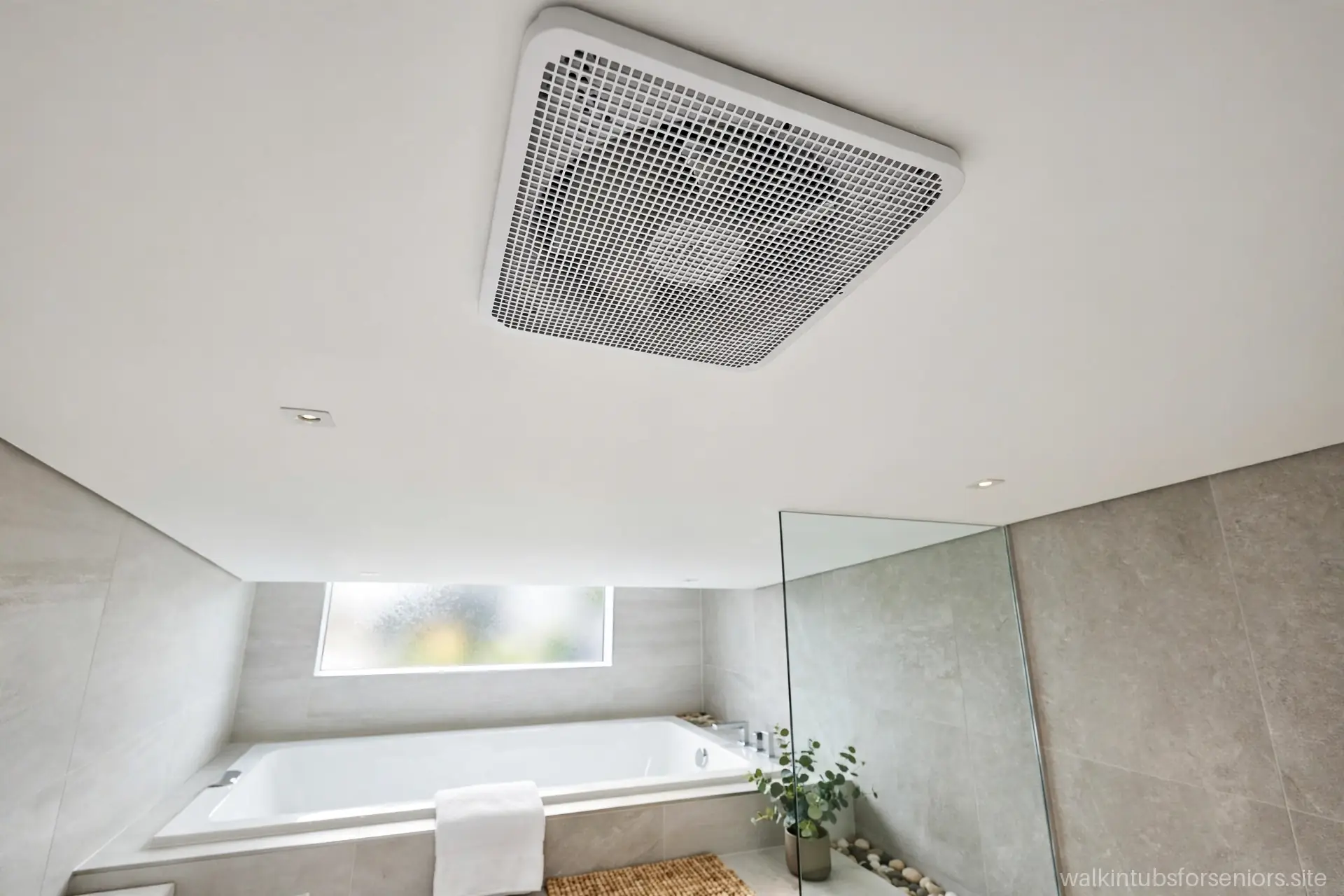
The fix starts with the exhaust fan, the most neglected appliance in the house. Run it during every bath or shower and for twenty to thirty minutes afterward — humidity lingers long after the water stops. If your fan is old, weak, or deafeningly loud (the reason nobody runs it), replace it: modern fans move more air quietly, and some include humidity sensors that run automatically until the air clears. Size matters — a fan rated for your bathroom’s square footage actually clears the air; an undersized one just makes noise. And verify it vents outdoors, not into the attic, where dumped moisture creates a whole new set of problems.
Beyond the fan, small habits compound: squeegee the tub and walls after use to remove the water film that feeds mildew, leave the bathroom door open after bathing to let humidity disperse, and wash bath mats and shower curtains regularly before mildew establishes. If condensation streams down the walls after every shower, that is your bathroom telling you the ventilation is inadequate — listen to it before the moisture reaches the subfloor or the wall cavities. Dry bathrooms keep their traction, their fixtures, and their people safer, longer.
If the exhaust fan cannot keep up even when it runs properly — common in bathrooms with high ceilings or no window — a small portable dehumidifier is a reasonable backup. Empty it daily or choose a model with a drain hose routed to a sink; a dehumidifier that sits full and idle helps no one. In humid climates, this single appliance can be the difference between grout that stays clean and grout that needs bleaching every month. It also protects painted surfaces and woodwork from the slow peeling that chronic humidity causes, preserving the finishes your lighting upgrades depend on for their effect.
One last ventilation check that costs nothing: hold a tissue up to the running fan’s grille. If the tissue barely stirs, the fan is either failing or the duct is blocked — a common finding in older homes where ducts have sagged or filled with lint and dust. Cleaning or replacing the duct run is a small job with an outsized payoff. Ventilation is invisible when it works and expensive when it does not; a two-minute tissue test tells you which situation you are in.
Frequently asked questions
What color temperature is best for bathroom LEDs?
Neutral to slightly warm white (around 3000K–4000K) renders skin tones and colors accurately without the harshness of cool daylight bulbs. Very warm bulbs (2700K and below) can make it harder to see contrast on the floor.
Is heated flooring worth it?
It is a comfort luxury with a safety side benefit: warm floors encourage unhurried movement and reduce the temptation to rush through a cold bathroom. It adds meaningful cost to a flooring project — weigh it against higher-priority safety spending first.
Can I upgrade lighting myself?
Bulb swaps, nightlights, and plug-in motion sensors are easy DIY. Anything involving new wiring, new circuits, or fixtures in wet locations should be done by a licensed electrician — bathrooms and electricity demand professional respect.
This guide is general information only — not contractor or electrical advice. Hire licensed professionals for wiring and flooring installation.